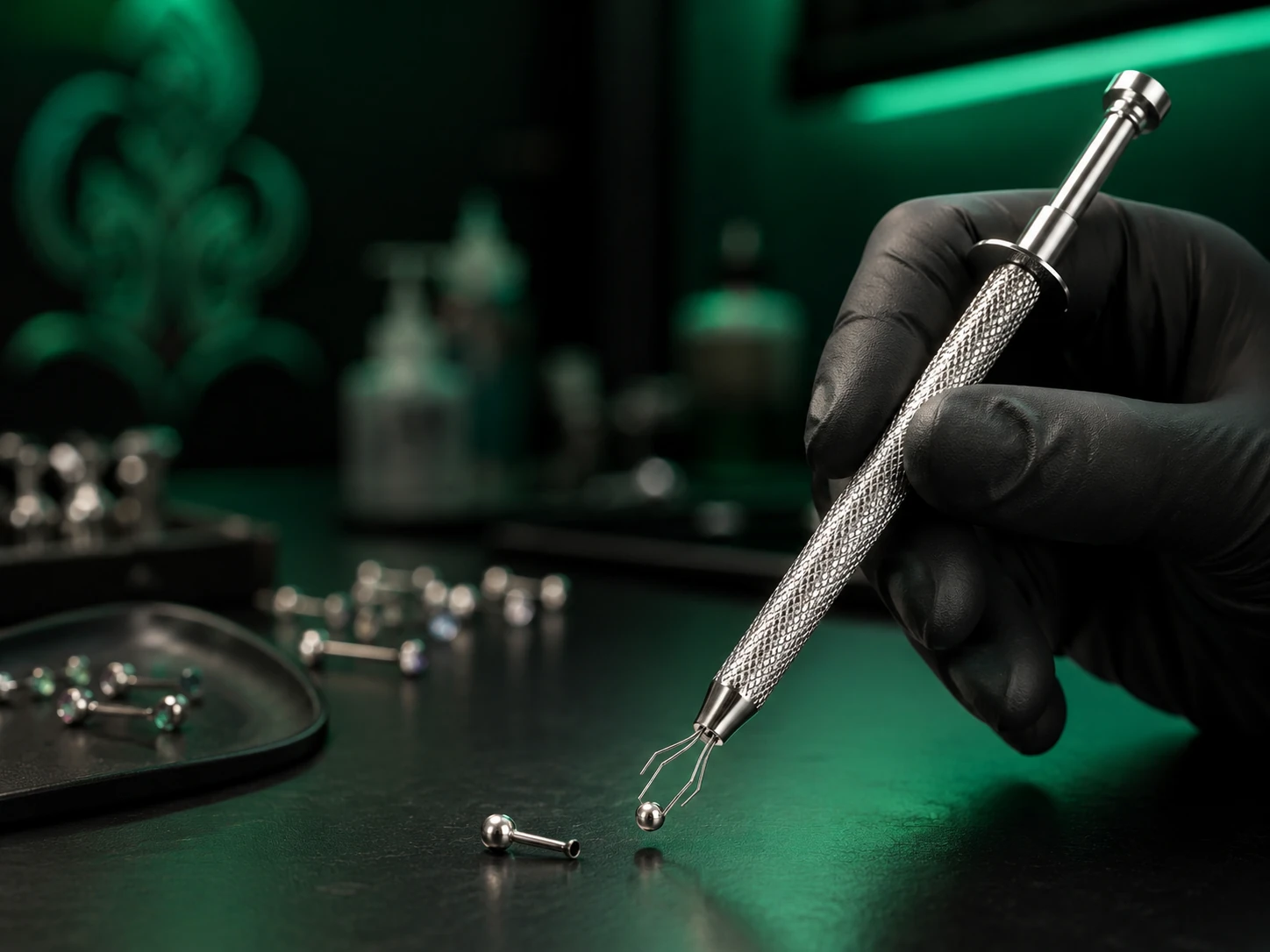
Una bolita de joyería suelta es lo suficientemente pequeña como para pasar desapercibida. Puede rodar bajo una bandeja, girar en la punta del dedo o caerse justo cuando la acercas al extremo roscado. Buscarla lleva solo unos segundos, pero interrumpe tu atención y genera incertidumbre sobre el siguiente paso.
Ese es el problema específico que puede solucionar una pinza para perforaciones. Permite que la pieza pequeña se apoye mientras la observas y la colocas en su sitio. No reemplaza el resto del kit de perforación ni hace que la tarea sea segura para alguien sin la formación adecuada. Simplemente facilita el control de una pieza pequeña y resbaladiza.
Para un kit personal, esa distinción es importante. Una herramienta específica para piercings se justifica cuando se manipulan cuentas, bolitas o pequeños adornos con la suficiente frecuencia como para notar la misma molestia una y otra vez. Si rara vez se tocan estas partes, usar los dedos puede ser la opción más sencilla.
¿Por qué una pequeña bola de joyería causa tanta interrupción?
Una bola lisa ofrece muy poco agarre a los dedos. Se puede apretar con más fuerza, pero la presión adicional suele hacer que gire en lugar de quedarse quieta. Un anillo o barra más grande tiene un borde que facilita su manejo. Un extremo redondo pequeño no.
Una vez que la bola se mueve, el trabajo cambia. Ya no se trata de comprobar el ajuste ni de alinear una rosca. Ahora, la tarea consiste en buscar con la mirada un objeto brillante en la bandeja que podría haber rodado hasta algún lugar que no se ve. Si la pieza está cerca de un desagüe, un hueco u otro elemento de trabajo, esa breve búsqueda puede convertirse en una interrupción mayor.
El problema suele ser el control, no la fuerza.
Intenta sujetar una cuenta pequeña entre dos dedos mientras la giras para encontrar la abertura. La presión adecuada es ligera y constante. Apretar con más fuerza no te dará una mejor visión, y unas pinzas más grandes podrían tapar la parte que intentas ver.
Aquí es donde un soporte para la bola del piercing resulta fundamental. Sujeta la pieza pequeña sin que tengas que usar los dedos para todo el trabajo. Puedes tener la pieza a la vista, hacer un pequeño ajuste y volver a colocarla en el mismo sitio cuando termines.
¿Qué debe hacer bien un extractor de bolas perforantes?
Comience por el extremo de la herramienta, no por el nombre del paquete. Debe tocar la bola o cuenta sin apretarla. Aún debe poder ver la pieza y el lugar donde debe ir. Un mango que se desliza en la mano puede anular la ventaja de un punto de contacto preciso.
El tipo de pieza que manipulas también importa. Una bola estándar, una cuenta y una piedra muy pequeña no se sienten igual. Vale la pena considerar una herramienta de bola para perforaciones diseñada específicamente para ello cuando esas piezas diminutas son las que te retrasan.
Un punto de contacto pequeño importa más que un asa grande.
No necesitas una herramienta grande para un objeto pequeño. Una forma compacta facilita acercarla a la cuenta sin mover los demás elementos de la bandeja. Además, te permite comprobar la pieza desde varios ángulos antes de soltarla.
La prueba práctica es sencilla: ¿puedes coger el extremo pequeño, verlo con claridad y dejarlo en cualquier sitio sin tener que ir tras él? Si la respuesta es sí, la herramienta cumple con su función. Si el agarre es demasiado ancho o el contacto resulta incómodo, añadir más funciones no solucionará el problema.
¿Dónde encaja mejor el recogepelotas pequeño de YABA?
YABA pequeño agarrador de pelotas Está fabricada en acero inoxidable y cuenta con un mango antideslizante. Estas características coinciden con el problema descrito anteriormente. El cuerpo se mantiene compacto, mientras que el mango texturizado proporciona un agarre más seguro para los dedos cuando el extremo de la joya es demasiado pequeño para sujetarlo con facilidad.
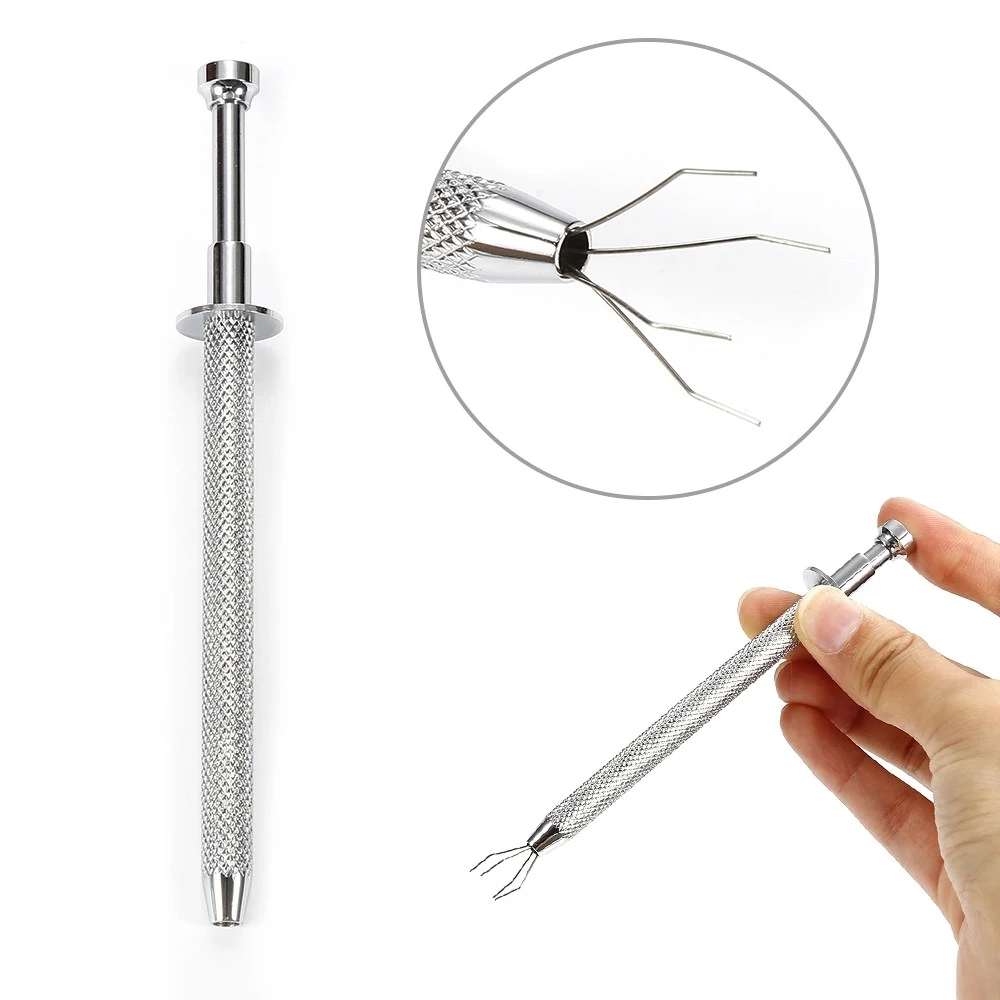
La pinza está diseñada para cuentas y bolitas. YABA también la describe como adecuada para piedras pequeñas o diamantes. Esto facilita su inclusión en un kit: es una herramienta para pequeños detalles sueltos, en lugar de un sustituto general para cualquier pinza o alicate.
Sus dimensiones son aproximadamente 17 x 3 x 2 cm y su peso es de unos 30 g. Estas medidas facilitan su almacenamiento. Puede guardarse en una bolsa, bandeja o estuche pequeño sin ocupar demasiado espacio. El paquete incluye una pinza, para que pueda comparar su tamaño con el de las piezas que ya utiliza.
Por qué el material, el agarre y el tamaño funcionan en conjunto
El acero inoxidable, el mango antideslizante y el diseño compacto cumplen una función diferente. El material define el cuerpo de la herramienta. El mango influye en su ergonomía. Las dimensiones determinan si puede tenerla a mano en lugar de guardarla en un cajón.
Ningún detalle por sí solo hace que una herramienta sea adecuada para todos. Si nunca trabajas con pequeñas piezas de joyería, un soporte para bolas de perforación puede no serte útil. Si una cuenta se cae constantemente durante su manipulación habitual, la combinación de todas las características es más importante que una larga lista de funciones adicionales.
¿Cuándo es más conveniente usar una pinza de agarre que los dedos o unos alicates más grandes?
Los dedos siguen funcionando bien cuando la pieza es lo suficientemente grande como para sujetarla y solo se necesita un ajuste rápido. No hay necesidad de usar una herramienta cada vez que se manipula una joya. El problema surge cuando la bolita gira antes de que se pueda alinear, o cuando se deja caer repetidamente al intentar ver la conexión.
Las pinzas más grandes tienen su utilidad. Sus mandíbulas y palanca son ideales para las tareas que las requieren. Una herramienta más pequeña para joyería de perforación es más apropiada cuando el objetivo es simplemente sujetar una cuenta, una bola o una piedra pequeña en un espacio estrecho. Usar la herramienta más pequeña para esa tarea específica puede ser menos incómodo que acercar una herramienta más grande a una parte que apenas se ve.
Limita la función de la herramienta.
Una herramienta de bola para perforaciones puede sujetar una pieza pequeña y suelta. No te ayudará a elegir la joya adecuada, a explicar cómo realizar una perforación ni a sustituir la guía profesional en caso de una perforación difícil. Tener esto claro facilita la decisión de compra.
No se trata de decidir si reconstruir todo el kit, sino de determinar si una pequeña pinza puede solucionar una interrupción repetida. Este es un criterio útil para cualquier soporte de bola para joyería de perforación, incluido el formato YABA.
¿Qué debes comprobar antes de añadir uno a tu kit?
Fíjate en las piezas que usas habitualmente. Si las bolitas, las cuentas o los adornos se te resbalan de los dedos con frecuencia, una herramienta específica tiene una utilidad clara. Si el problema ocurre solo una vez al año, tu método actual puede ser suficiente.
Luego, compara la herramienta con el espacio disponible a tu alrededor. El formato de YABA, de aproximadamente 17 x 3 x 2 cm, te permite medir fácilmente y compararla con una bolsa, bandeja o estuche. Es más probable que una herramienta que esté a mano te sea útil que una que esté oculta entre el resto de tu equipo.
Comprueba también el mango. Una superficie antideslizante es importante cuando necesitas sujetar una pieza pequeña con suavidad en lugar de apretarla. El contacto debe ser adecuado para las cuentas o bolitas que manipulas, y el tamaño general debe permitirte una visión despejada.
Para una comparación más amplia, YABA Colección de herramientas de perforación Muestra formatos relacionados. Usa la colección para comparar trabajos y luego vuelve a la parte que causó el problema. Un soporte para joyas de perforación solo es útil cuando se ajusta a esa tarea específica.
Conclusión
Un sujetabolas para piercings es una solución práctica para un problema muy específico. Cuando la punta de una joya gira o se desliza, sujetarla con precisión te da tiempo para ver la pieza y ajustarla sin necesidad de usar una herramienta voluminosa.
La pinza de YABA combina acero inoxidable, un mango antideslizante, un cuerpo compacto de aproximadamente 17 x 3 x 2 cm y un peso de unos 30 g. Está diseñada para cuentas y bolas y también puede sujetar una piedra pequeña o un diamante. Si esas son las piezas que se resbalan en tu rutina, abre el Agarrador de pelotas YABA y compara su tamaño con el del kit que ya utilizas.
Preguntas frecuentes
P1: ¿Un extractor de bolas para piercings sirve solo para bolas de joyería?
A1: No. YABA describe esta pinza para cuentas y bolas, y también puede sujetar una piedra pequeña o un diamante. Es más útil cuando el objeto es demasiado pequeño o liso para sujetarlo firmemente con los dedos.
P2: ¿Un sujetabolas es lo mismo que unas pinzas de perforación?
A2: No. Un sujetabolas tiene una función específica: sujetar cuentas pequeñas, bolitas y pequeños adornos. Las pinzas y los alicates tienen formas y usos diferentes, así que elige la herramienta que mejor se adapte a la pieza que tienes delante.
P3: ¿Qué debo comparar antes de elegir una herramienta pequeña para perforaciones?
A3: Compara la parte que necesitas sujetar, el mango, el punto de contacto y el tamaño general. Comprueba también si la herramienta cabe a mano en tu kit actual. Una herramienta compacta para joyería de perforación es útil cuando resuelve un problema de manipulación repetitiva sin ocupar espacio innecesario.