Tattoo ink holds long-term in one layer of skin: the dermis, which sits roughly 1 to 2 mm below the surface. Needle depth is how far the needle actually travels into the skin on each pass, and it decides whether the ink lands in that layer. The setting on your machine does not decide it alone. Needle hang caps how deep the needle can go, and your hand pressure, skin stretch and machine angle decide how much of that range you use.
Most depth problems come from treating the machine setting as the depth itself. An artist sets 2 mm of hang, assumes the ink sits 2 mm deep, and then cannot explain a blowout on thin skin or a line that fades in the heal. This guide separates the setting from the result: where the ink needs to land, how hang works on pen and coil machines, which starting depths suit lining, shading and packing, and how to test a setting before it reaches a client.
Where the ink has to land
Skin renews itself from the top down, and each layer treats ink differently.
| Layer | What happens to ink placed there |
| Epidermis (surface layer) | The layer sheds and rebuilds constantly, so ink placed here fades within weeks |
| Dermis (roughly 1–2 mm down) | Fibrous tissue traps the pigment particles, and the ink stays visible for years |
| Subcutaneous fat (below the dermis) | Loose fatty tissue cannot trap pigment, so ink spreads sideways into a blowout |
The working window is therefore narrow. Work shallower than the dermis and the tattoo looks solid on the day and pale after the heal. Work through the dermis and the same ink pools under the skin with blurred edges. A faded line can be reworked at a touch-up session. A blowout can only be lasered off or covered, which is why every adjustment in this guide starts shallow and adds depth in small steps.
Needle hang is not needle depth
Needle hang is the distance the needle extends past the cartridge or tube tip at full extension. It is a machine setting, measured with the machine running, and it sets the maximum the needle can reach. Needle depth is how far the needle enters the skin during a pass, and it is always less than or equal to the hang.
Four variables close the gap between the two numbers. Hand pressure pushes the needle toward its full extension. Skin stretch firms the surface and changes how far the needle sinks. Machine angle tilts the stroke, so an angled pass enters shallower than a vertical pass at the same hang. Stroke length changes how hard the needle arrives, and a hard-hitting machine drives the needle to full depth with less hand pressure than a soft one.
Grouping choice changes the picture as well. A small liner grouping meets less surface resistance than a wide magnum, so a 3RL or 5RL reaches full depth more easily at the same hang and blows out sooner on thin skin. Long tapers slide into the skin more easily than short tapers for the same reason. When you change grouping or taper, treat the depth as unsettled until you have tested the new combination. The needle size code guide sets out the grouping and taper options that feed into this choice.
Setting hang on pen and coil machines
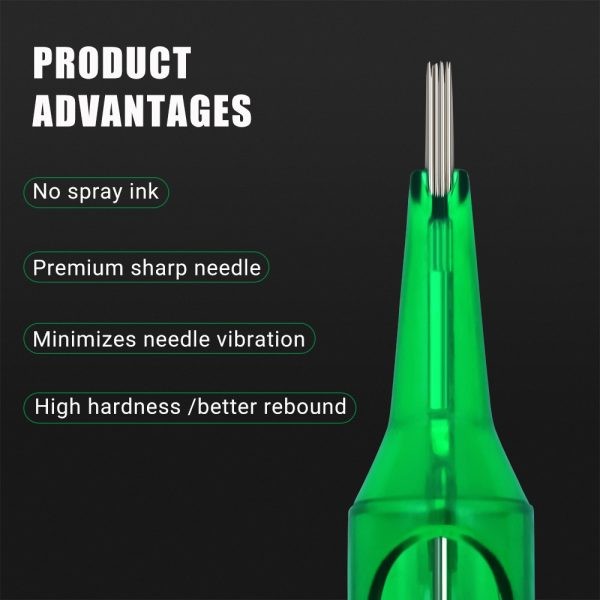
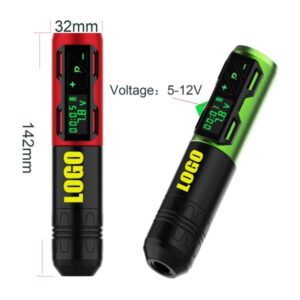
On a pen or rotary machine, hang adjusts at the grip. Rotating the grip or the depth collar moves the cartridge needle in or out. The InkOne adjustable stroke pen sets needle length at the base of the machine: turn the base and the needle extends or retracts, with a 3.5 mm stroke behind it. Whatever the mechanism, set the hang with the machine running so you can see the needle at full extension, and start with less extension than you expect to need.
On a coil machine, hang adjusts at the tube. Loosen the tube vise, slide the tube up or down the needle bar, and lock it again. The needle should sit flush with the tube tip at rest and extend to your chosen hang at the bottom of the stroke.
Two working styles use the setting differently. Riding the tube keeps the cartridge tip against the skin, so the hang is the depth and the depth cannot overshoot. The cost is visibility and drag: the tip covers the work point and pushes ink across the stencil. Floating the needle leaves a gap between tip and skin, which keeps the work point visible and puts depth control in the hand. Floating is the more capable style and the less forgiving one, because nothing mechanical stops the needle at the set depth.
Starting depths for lining, shading and packing
Published machine guides converge on a narrow band of starting points, measured as ink placement depth in the skin rather than hang.
| Técnica | Starting depth | Why |
| Lining | About 1.5 mm | Lines need placement precision more than volume, and a controlled depth keeps edges sharp |
| Sombreado | About 2 mm | Gradient work needs even pigment distribution across many light passes |
| Colour packing | About 2–2.5 mm | Dense saturation needs the pigment seated fully in the dermis on each pass |
Treat these figures as the first test setting, not the answer. Skin thickness moves the target: the back, thighs and calves take the standard range, while inner arms, ribs, hands and feet run thinner and need less. Older skin is thinner and reacts faster, so it takes a lighter setting than young skin at the same placement.
One limit matters for packing. Saturation comes from even, deliberate passes at the right depth, not from pushing deeper. A heavier pass at 2.5 mm does not seat more colour than two even passes at 2 mm, and it leaves the skin in worse condition for the heal. If an area refuses to saturate, check the hang and the ink flow before you add depth.
Reading the skin while you work
The skin reports depth errors during the session, long before the heal grades them.
Running too deep shows as bleeding that wells up faster than you wipe it away, lines that spread under the surface as you pull them, and skin that looks torn or chewed rather than lightly irritated. Pain spikes beyond what the body area usually produces are another signal. Healed results confirm it later through heavy scabbing and blurred edges.
Running too shallow shows as patchy saturation, ink that lifts off with the wipe instead of staying in the skin, and areas that need four or five passes to fill. The work looks solid on the table and heals light, because the pigment sat in the epidermis and shed with it.
When several signs appear together, check the hang first. It is the one variable you can measure exactly, and a small correction early in the session is cheaper than a correction conversation at the touch-up appointment.
Dial the setting in on practice skin first
A new machine, a new grouping or a new body area all reset your depth judgement, and practice skin is where the reset belongs. Run lines and shading at one hang setting, then change one variable at a time: hang, voltage or hand speed, never all three together. Changing everything at once teaches you nothing, because you cannot tell which change moved the result.
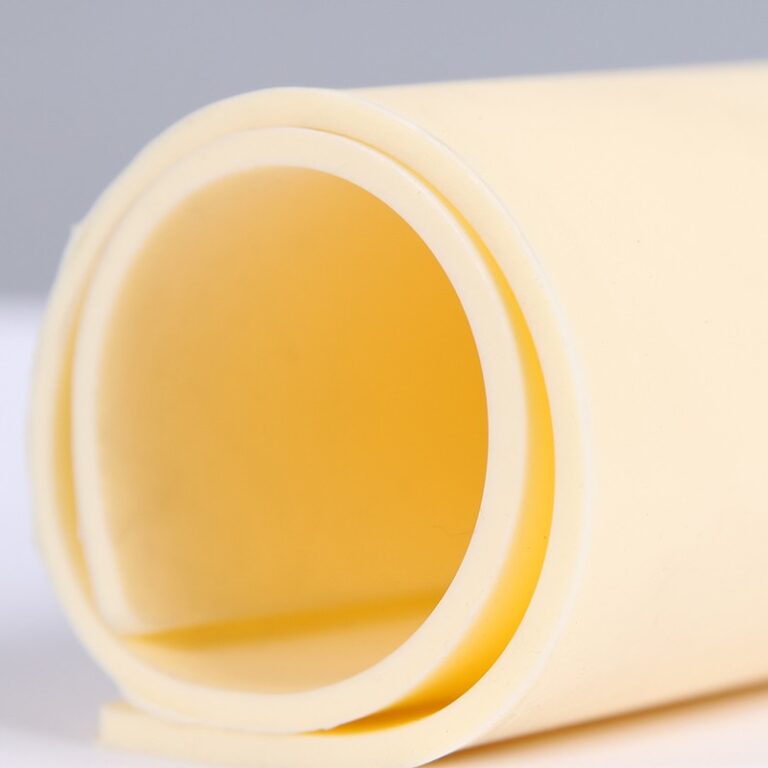
Synthetic skin also gives you a measurement that real skin never will. Cut the sheet through a finished line and measure the ink channel against a ruler, and you have your actual working depth in millimetres for that exact setup and hand. The practice skin depth drills build a full routine around that feedback, including the line patterns that expose speed and angle problems alongside depth ones. Sheets and forms for the drills sit in the beginner practice range, in flat sheets and moulded arm formats.

Setting up for depth control
Depth control gets easier when the setup removes variables. A pen machine with a positive depth adjustment, cartridges with a consistent membrane and tip fit, and practice material in the studio all narrow the guessing. Browse the tattoo machine range for pens with grip or base depth adjustment, and send your current machine model plus the groupings you run most if you want a matched cartridge and practice setup quoted. Studios training beginners can add the practice formats to the same order, so the drills and the client work run on the same groupings.
A pesar de supplies the machines, cartridges and practice material used in this guide from one catalogue, which keeps the setup consistent when you change one variable at a time.
Preguntas frecuentes
Q1: How deep should a tattoo needle go, in millimetres?
A1: The ink needs to sit in the dermis, roughly 1 to 2 mm below the surface. Common starting points are about 1.5 mm for lining, 2 mm for shading and 2 to 2.5 mm for colour packing, adjusted for skin thickness at the placement.
Q2: Is needle hang the same as needle depth?
A2: No. Hang is how far the needle extends past the cartridge tip at full extension, and it caps the depth. Actual depth also depends on hand pressure, skin stretch, machine angle and stroke, so the same hang produces different depths in different hands.
Q3: Why do small liners blow out more easily?
A3: A small grouping meets less surface resistance, so it reaches full depth with less pressure than a wide grouping at the same hang. On thin skin that margin disappears quickly, which is why small liners need a shallower start and a test mark.
Q4: Can I keep one depth setting for the whole body?
A4: No. Skin thickness varies by area and by client. A setting that suits a thigh will run deep on ribs or inner arms, so adjust the hang as you move around the body instead of locking one setting for the session.