
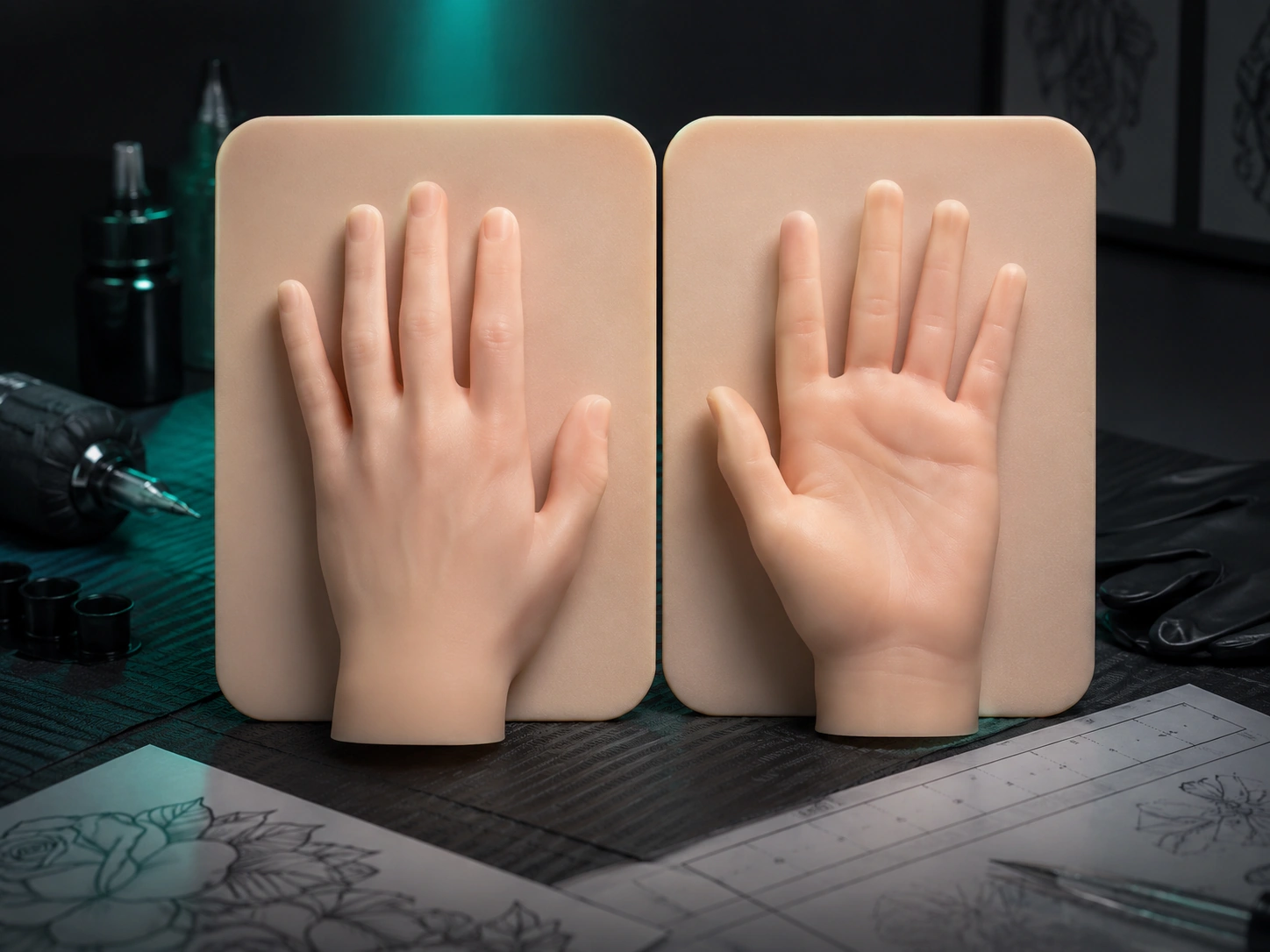
La piel sintética para practicar tatuajes es útil porque permite detectar inconsistencias en la técnica antes de que un principiante trabaje con un cliente. Una línea que se aclara, se salta pasos, se ensancha repentinamente o crea un surco perceptible puede indicar un problema de control de profundidad, pero la marca nunca debe juzgarse únicamente por la profundidad. La velocidad de la mano, la configuración de la máquina, el ángulo de la aguja, la presión, el flujo de tinta y la resistencia de la superficie sintética influyen en lo que se ve.
Por eso, una buena práctica no se trata tanto de buscar un número "correcto", sino de aprender a repetir el mismo movimiento con precisión. La piel sintética para tatuar ofrece una superficie donde se pueden comparar los errores. Además, la piel sintética de silicona te ayuda a ir más despacio, aislar una variable y desarrollar una rutina de práctica para trazar líneas más estables antes de que la piel real introduzca movimiento, estiramiento, cicatrización y otros factores.
¿Por qué la piel durante la práctica del tatuaje puede revelar problemas de profundidad tan rápidamente?
La piel sintética conserva prácticamente cada pasada. Puedes terminar una hilera de líneas, limpiar la superficie y comparar el principio, el medio y el final sin esperar a que cicatrice. Esto hace que la piel sintética para practicar tatuajes sea especialmente útil para aprender a mantener la consistencia.
El error consiste en tratar cada línea defectuosa como un problema de profundidad de aguja. Imaginemos dos líneas que parecen débiles. Una puede haberse hecho con la aguja apenas tocando la superficie. La otra puede deberse a mover la mano demasiado rápido para la velocidad de la máquina. Parecen similares, pero la corrección es diferente. Si se presiona con más fuerza la segunda línea, se puede crear un nuevo problema en lugar de solucionar el primero.
Un hábito más útil es observar la relación entre el ritmo de la máquina, el movimiento de la mano, el ángulo y la presión. La longitud de la aguja indica hasta dónde puede extenderse más allá del cartucho, pero no revela con exactitud cómo la mano controla la profundidad de trabajo en cada momento. Por lo tanto, la profundidad de la aguja de tatuaje es una variable técnica, no simplemente una medida configurada en la máquina.
¿Qué aspecto tiene una línea demasiado superficial en piel sintética para tatuar?
Un trazo superficial suele verse débil, interrumpido o irregular tras la limpieza. Algunas partes de la línea pueden parecer limpias, mientras que otras parecen desaparecer. En piel sintética para tatuar, los principiantes a veces repiten el mismo trazo una y otra vez, lo que dificulta identificar la causa original.
Antes de añadir otra pasada, inspeccione todo el movimiento. ¿Aceleró la mano en la parte central? ¿Se elevó la muñeca al extender el brazo sobre la hoja? ¿Cambió el ángulo del cartucho al seguir una curva? ¿Estaba la superficie apoyada de manera uniforme? Cualquiera de estos factores puede producir una línea que parezca que la aguja no penetró lo suficiente.
En su lugar, realiza una prueba corta. Traza cinco líneas rectas con la misma configuración de la máquina y mantén el mismo cartucho, tinta y piel sintética de silicona. En la siguiente línea, cambia solo un factor, como la velocidad de la mano. La diferencia entre las líneas te dará mucha más información que oscurecer repetidamente una línea que no funcionó.
¿Qué aspecto puede tener una pasada demasiado profunda en la piel de práctica para tatuar?
Una pasada demasiado agresiva suele dejar algo más que una línea oscura. Tras varias pasadas, puede observarse un canal pronunciado, bordes ásperos, desgarros en la superficie o una zona con aspecto de haber sido mordisqueada. En materiales de práctica más finos, la aguja también puede marcar o perforar la parte inferior. Estas señales indican que debe detenerse e inspeccionar la técnica en lugar de intentar que la línea quede más saturada.
Aquí es donde los principiantes necesitan hacer una distinción importante: el daño en la piel sintética para practicar tatuajes no es una simulación directa de una herida o un corte en una persona. El material sintético no tiene capas vivas, flujo sanguíneo, inflamación ni capacidad de cicatrización. Puede mostrar que tus movimientos son bruscos o inconsistentes, pero no puede garantizar lo que sucedería en la piel humana.
Reinicia el ejercicio. Reduce la presión innecesaria, vuelve a una posición cómoda de la mano y traza una línea nueva en una zona sin usar. Si la superficie sigue desgarrándose incluso cuando sientes que controlas el movimiento, inspecciona el cartucho y el material de práctica. Una superficie de entrenamiento desgastada puede generar información confusa.
¿Cómo deben estructurar los principiantes la práctica de líneas de tatuaje antes de cambiar de configuración?
Una buena práctica para trazar líneas de tatuaje debería resultar casi aburrida al principio. La clave está en la repetición. Un principiante que cambia el voltaje, la agrupación de agujas, la velocidad de la mano, el ángulo de agarre y la tensión superficial al mismo tiempo no podrá distinguir qué cambio mejoró la línea.
Empieza con un cartucho y una configuración de máquina que te resulten fáciles de controlar. Usa la misma sección de material y traza líneas guía paralelas. Dibuja líneas rectas en una dirección y luego repítelas en la dirección opuesta. Después, dibuja curvas suaves y círculos. Fotografía la hoja antes de hacer cualquier cambio.
En la siguiente ronda, cambia una variable. Puedes ralentizar ligeramente la mano, ajustar el movimiento de la muñeca al seguir una curva o mejorar la forma en que se sujeta la hoja. Compara las nuevas marcas con las primeras. Este sencillo método convierte la práctica del tatuado en un pequeño experimento en lugar de un juego de adivinanzas.
Para principiantes que construyen un banco de entrenamiento más amplio, el Gama de práctica para principiantes de tatuajes YABA Es un lugar útil para comparar formatos de práctica y herramientas de apoyo sin mezclar el ejercicio con equipos de estudio no relacionados.
¿Qué ejercicios prácticos revelan más rápidamente los problemas de control?
El mejor ejercicio no es necesariamente el más complicado. Las formas simples exponen la inconsistencia porque no hay dónde ocultar un pase tembloroso. Antes de intentar una hoja completa de ejercicios rápidos, usa ejercicios que hagan que la mano repita el mismo movimiento.
Las líneas rectas muestran los cambios de velocidad.
Dibuja líneas lo suficientemente largas como para que tengas que mover la mano, no solo los dedos. Busca cambios bruscos de intensidad o grosor cerca del centro y el final. Estos cambios suelen revelar dónde la mano acelera, la muñeca se levanta o el ángulo cambia.
Las curvas muestran el control de la muñeca y del ángulo.
Los círculos y las curvas en S son útiles porque un principiante debe mantener un movimiento suave al cambiar de dirección. Si un lado de cada círculo se aclara, habrás encontrado un patrón repetible que vale la pena corregir.
Pequeñas formas rellenas muestran exceso de trabajo.
Rellena algunos cuadrados o círculos pequeños y comprueba cuántas pasadas necesitas para que la superficie quede uniforme. El objetivo no es dañar la superficie hasta que se oscurezca, sino aprender un patrón controlado y observar cuándo las pasadas repetidas empiezan a rugosizar el material.
¿El grosor o la forma de la piel tatuada con silicona influyen en la respuesta?
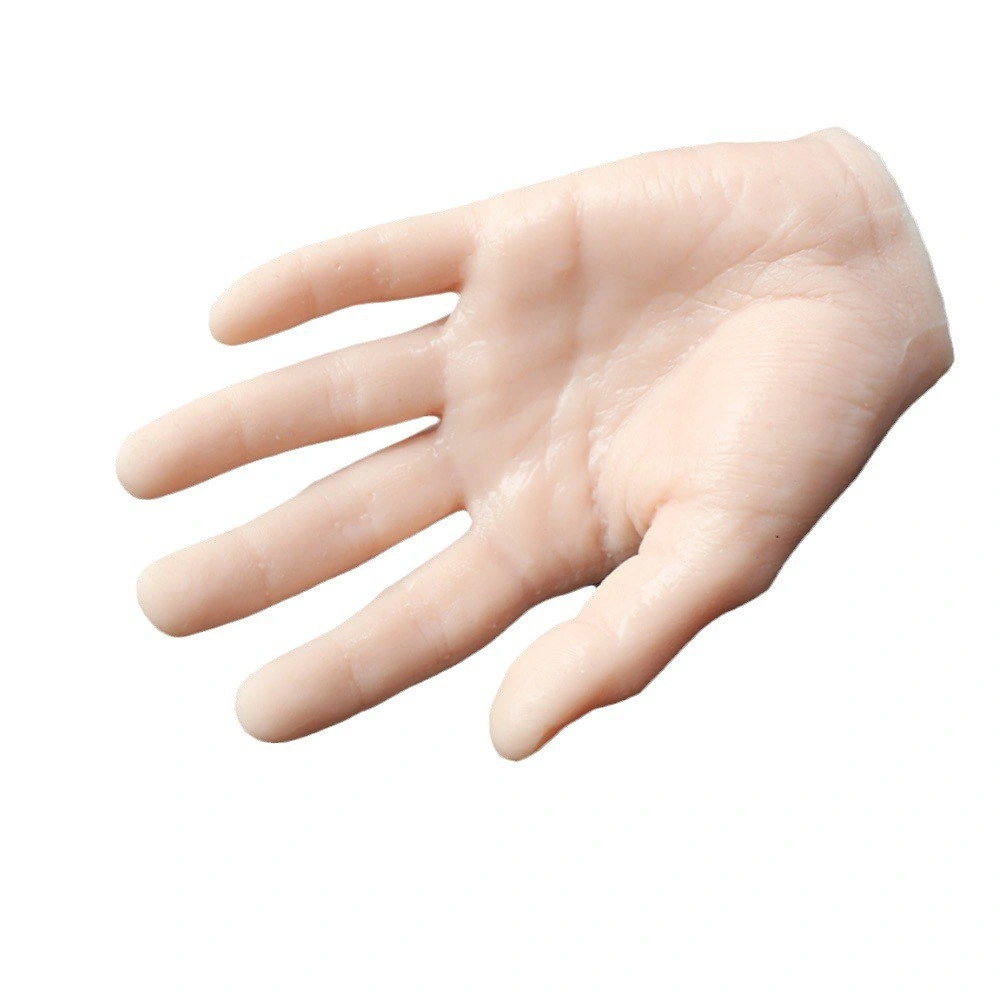
Sí. Una lámina plana, una lámina delgada tipo envoltura y una mano o brazo moldeado no entrenan exactamente la misma habilidad. La piel sintética de silicona plana para tatuajes es práctica para ejercicios repetitivos de líneas, degradados, letras y diseño, ya que el ángulo de trabajo se mantiene constante. Un molde de entrenamiento curvo obliga a la muñeca y al ángulo de la máquina a adaptarse a medida que la superficie cambia de dirección.
El grosor también influye en lo que se puede observar. Una lámina delgada permite ver fácilmente si se está perforando el material, mientras que una más gruesa ofrece más espacio para realizar ejercicios repetidos. Ninguna de las dos es automáticamente más realista para todas las técnicas. Elige el formato que mejor se adapte a la habilidad que quieras practicar.
YABA incluye formatos de piel de práctica dentro de su gama de entrenamiento, entre los que se incluyen: YaBa Tattoo Practice Skin 15×20” Espalda completa en blancoPara un comprador, la cuestión práctica es si el tamaño, la forma, la flexibilidad y el propósito del entrenamiento de la superficie se ajustan a los ejercicios que realmente se repetirán.
¿Cuándo deberías dejar de culpar a la interfaz de práctica e inspeccionar la configuración?
Si todas las líneas fallan de la misma manera, es posible que la superficie no sea el problema principal. Verifique la correcta colocación del cartucho, el funcionamiento de la máquina, la consistencia de la tinta, la visibilidad de la plantilla, la posición de la mano y el soporte debajo de la hoja. Un problema que se presenta en varias áreas nuevas generalmente requiere una revisión más exhaustiva de la configuración.
También puede ocurrir lo contrario. Si una lámina de silicona ya ha sido sometida a un uso intensivo, limpiada repetidamente, doblada, estirada o perforada en la misma zona, la información que proporciona resulta menos útil. Pase a una sección limpia antes de emitir un juicio técnico.
Esta es otra razón para guardar hojas de práctica y fotos. Comparar una hoja nueva de esta semana con una de hace un mes puede revelar mejoras difíciles de notar en una sola sesión.
¿Qué debes comprobar antes de comprar piel sintética para practicar tatuajes?
Compra pensando en la tarea de entrenamiento, no solo en el precio unitario más bajo. Una comparación útil incluye la superficie, la flexibilidad del material, el grosor, la forma plana frente a la tridimensional, la claridad con la que se pueden inspeccionar las líneas después de limpiarlas y si el formato ofrece suficiente espacio libre para realizar ejercicios repetidos.
Un principiante que se centra principalmente en el control de líneas puede valorar una superficie plana amplia. Quien se prepara para realizar colocaciones curvas puede preferir una forma moldeada una vez que haya mejorado su consistencia básica. Un estudio o programa de formación puede priorizar los pedidos recurrentes y disponer de varios formatos para diferentes lecciones.
El objetivo es simple: la superficie de práctica debe facilitar el diagnóstico de errores, no dificultar su explicación. Si está montando una estación para principiantes más grande, puede Crea tu próximo entorno de entrenamiento con YABA. después de decidir qué ejercicios, tipo de máquina y formato de práctica necesita realmente.
Conclusión
La piel para practicar tatuajes funciona mejor cuando se la trata como una herramienta de retroalimentación controlada. Las líneas débiles no significan automáticamente "haz líneas más profundas", y los surcos irregulares no se vuelven útiles solo porque el pigmento se vea más oscuro. Analiza en conjunto la velocidad de la mano, el ángulo, la presión, el ritmo de la máquina, el comportamiento del cartucho y el estado de la superficie.
Una buena rutina para principiantes mantiene la mayoría de las variables fijas, cambia una a la vez y registra el resultado. Así, la profundidad de la aguja se convierte en algo que puedes controlar en lugar de algo que adivinas. Usa piel sintética para tatuar primero y así desarrollar movimientos repetibles; luego, continúa aprendiendo bajo la guía de un profesional antes de tatuar en piel real.
Preguntas frecuentes
P1: ¿Cómo sé si estoy tatuando demasiado profundo en la piel de práctica?
Una ranura pronunciada, un desgarro o un daño repetido en la superficie son motivos para detenerse, reducir la presión y volver a perforar en una zona nueva.
P2: ¿Por qué mis líneas se ven tenues en la piel de tatuaje de silicona?
Las líneas tenues pueden deberse a un contacto superficial, un movimiento rápido de la mano, un cambio de ángulo, un soporte deficiente o una velocidad inconsistente entre la máquina y la mano.
P3: ¿Es suficiente con piel sintética para tatuar antes de trabajar en piel real?
No. Es valioso para la práctica controlada, pero no puede reproducir la piel viva, la curación, el movimiento del paciente ni la experiencia profesional supervisada.