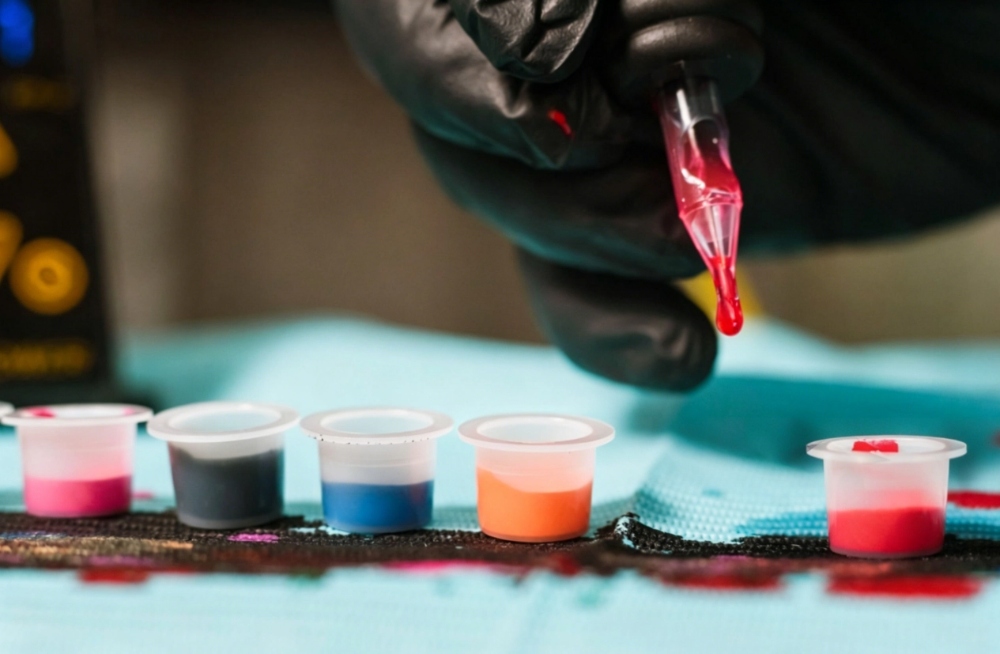
Walk into any busy private studio, and you will usually see a small army of little plastic ink cups sitting on the workstation. When you start an ambitious 8-hour realism piece or a massive Japanese back panel, your setup demands careful attention. You pour out a beautiful scale of grey wash and vibrant reds, ready to work. For the first two hours, everything flows perfectly. The machine pulls smooth lines, and the needle packs solid color into the skin without missing a beat.
However, around the four-hour mark, something frustrating usually happens. The dark colors suddenly look washed out. The bright white highlight color turns thick and refuses to leave the needle tip. You look down at your little plastic cups and notice the liquid looks entirely different than when you poured it. The heavy particles have dropped to the bottom, leaving clear liquid floating on top. This subtle change completely ruins the flow of your artwork. Today, we are going to look closely at why your liquids change state during a long day, and how working artists stop this problem from ruining their final healed results.
The Physical Reality of Heavy Pigment
You cannot solve a studio problem until you understand the basic chemistry of your supplies. The bottles sitting on your shelf are not a single, magical liquid. They are a complex mixture of completely different elements that naturally want to break apart from each other.
Why Particles Fall to the Bottom
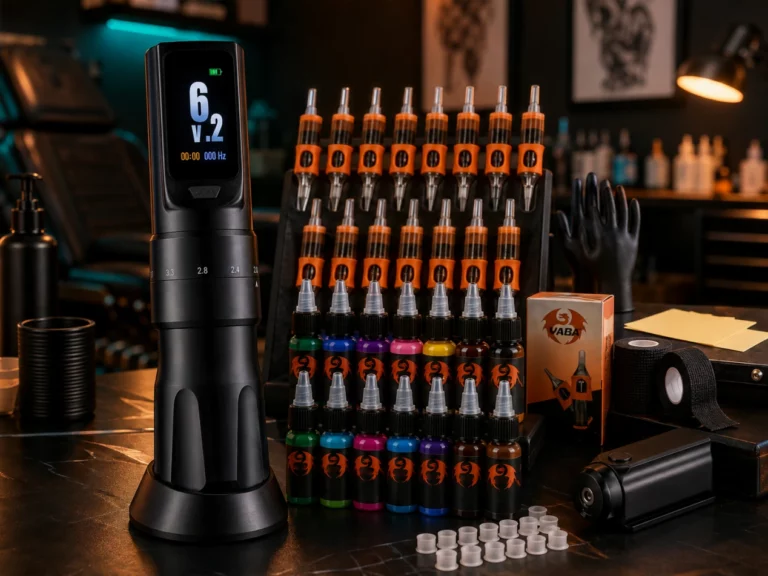
Every single bottle you buy contains two main parts: a liquid carrier fluid and solid, heavy color particles. The carrier fluid is usually a mix of water, glycerin, and witch hazel. Its only job is to carry the heavy color into the open skin pores. The problem is gravity. Solid color particles are physically heavier than the clear liquid they float in. If you leave a little cup sitting untouched on your tray for three hours while you work on a different section of the design, gravity pulls all the heavy weight downward. This is what causes tattoo ink sedimentation. The heavy black or red powder sinks to the very bottom, while the clear, watery carrier fluid floats up to the surface. When you dip your machine in, you only pick up the weak watery fluid, resulting in faded, patchy healed work.
The Problem with Thick Whites and Yellows
Not all colors separate at the same speed. Dark blacks and heavy greys drop out slowly over a few hours. However, bright whites and sunny yellows contain titanium dioxide. Titanium dioxide is incredibly thick and heavy. These specific colors separate incredibly fast. They do not just sink; they form hard, sticky clumps at the bottom of the cup. If a tiny clump gets sucked into the narrow plastic tip of your cartridge, it completely blocks the needle. This causes frustrating ink spitting, where the machine suddenly sprays black dots all over your clean purple stencil. You have to constantly fight to prevent ink settling if you want your highlights to pop cleanly without destroying the surrounding skin.
Traditional, Ineffective Methods of Mixing
When artists notice their cups separating, their first reaction is usually pure panic. They reach for whatever tool is closest to them to fix the problem quickly. Unfortunately, these rushed, traditional methods often make the situation much worse and introduce serious safety risks into the environment.
- The Plastic Toothpick Method: The oldest trick in the book is grabbing a small plastic toothpick and stirring the cup aggressively by hand. This fails for two reasons. First, a human hand cannot spin fast enough to break apart thick titanium dioxide clumps. Second, if you accidentally touch your dirty gloves to the clean toothpick, you just introduced a massive cross-contamination risk directly into the liquid you are about to push into a client’s bloodstream.
- The Machine Dip Method: Some artists try to mix the cup by just dipping their running tattoo machine into the liquid and letting the needle splash around. This is a terrible idea. It bends the fragile needle tips against the hard bottom of the plastic cup. It also wastes a huge amount of expensive battery power and creates a messy, splashing disaster on your workstation.
- Adding Distilled Water: If a cup looks too thick, people often drop some distilled water into it. While this makes it watery again, it completely dilutes the actual pigment power. You end up having to push the needle twice as hard into the skin just to pack enough color, causing heavy scabbing and a painful healing process for the client.
Upgrading to Mechanical Solutions
The human hand simply cannot beat gravity and chemistry on its own. To keep your liquids smooth and consistent for an entire 8-hour workday, you have to bring mechanical power into the equation. A small, dedicated tool changes your entire workflow.
Beating Separation Before It Starts
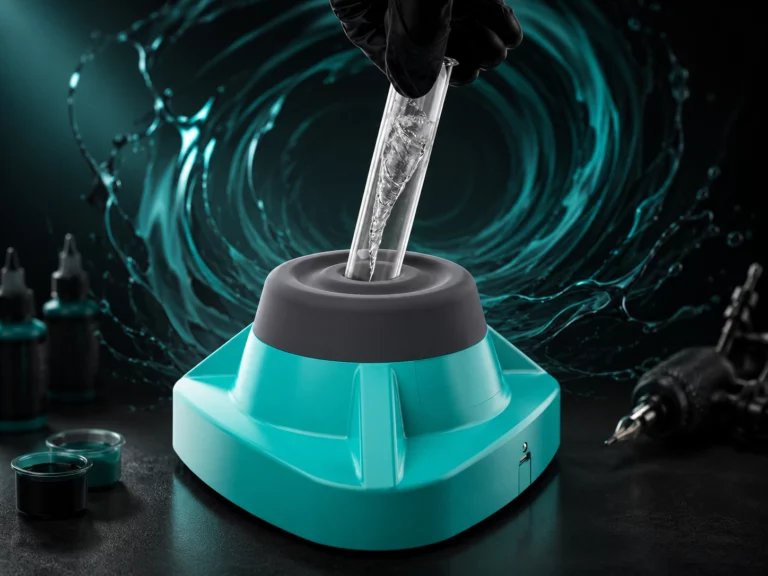
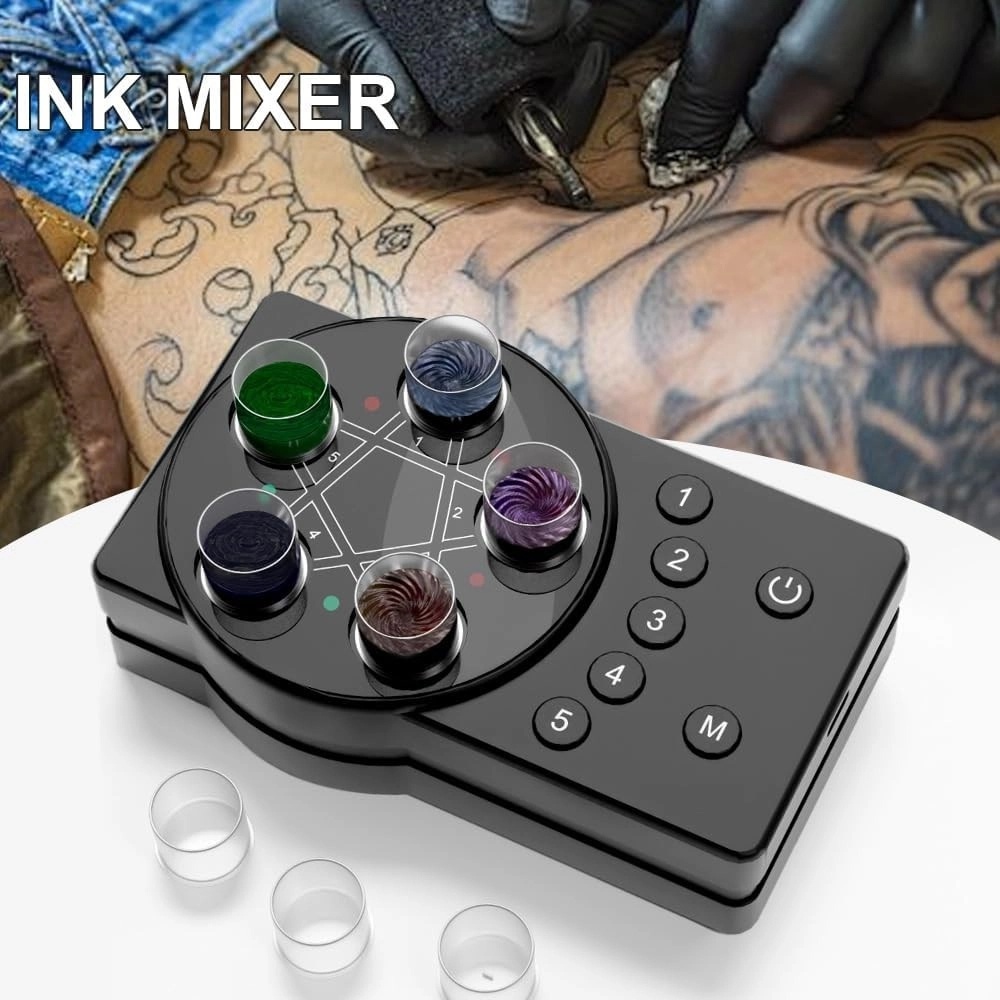
The most effective way to fight gravity is to destroy the clumps before you even pour the liquid out of the main bottle. Shaking a heavy bottle by hand for five minutes is exhausting and rarely works well enough. A professional electric ink mixer uses a high-speed rotating motor to create a powerful vortex inside the bottle. You just press the bottom of the bottle down onto the rubber pad, and the machine spins it at several thousand RPMs in five seconds. This violent spinning action violently crashes the heavy particles back into the carrier fluid, completely erasing any sign of tattoo ink separation. Your liquid pours out smooth, bright, and perfectly blended.
Managing the Open Cups Mid-Session
Solving the main bottle is great, but what about the little cups sitting on your tray for four hours? You cannot pick up the main mixer and put it on a tiny, open cup without causing a huge spill. For this specific mid-session problem, you need a targeted tool. A dedicated tattoo pigment stirrer is designed specifically for this exact scenario. It uses disposable, sterile plastic sticks attached to a tiny handheld motor. When you notice your white or yellow starting to separate in the cup, you simply attach a fresh stick, lower it into the cup, and press the button. The high-speed rotation instantly blends the liquid back together perfectly without any messy splashing. You then throw the cheap plastic stick away, ensuring your setup remains 100% sanitary.
The Impact on Your Final Art
Keeping your liquids perfectly blended is not just about making your tray look clean. It has a massive, direct impact on the physical quality of the art you create. The texture of your liquids dictates how smoothly your needles can actually do their job.
Achieving Smooth Gradients
When you are trying to create a smooth, soft grey wash gradient on a realistic portrait, consistency is absolutely everything. If your grey wash separates halfway through the tattoo, the dark shadows will suddenly look patchy and uneven. Mixing tattoo ink properly ensures that every single drop holds the exact same amount of pigment. This allows you to slowly build up soft, beautiful layers of shading without worrying about sudden, dark splotches appearing randomly on the skin.
Faster Healing for Clients
When your tattoo ink consistency is perfect, the needle flows smoothly into the dermis layer. You do not have to fight the skin or pass over the same spot three times just to force a clump of white pigment into a tight highlight. Fewer passes mean significantly less physical trauma to the human body. The skin swells less during the session, and it scabs much lighter during the recovery weeks. Your client has a much better healing experience, and your colors heal incredibly vibrant because the skin was not overworked and damaged.
Conclusion
Fighting against heavy color particles separating in your cups is a constant battle during long appointments. Ignoring the problem leads directly to patchy shading, clogged needles, and overworked skin. Relying on slow, messy hand-stirring with toothpicks simply wastes your valuable time and introduces severe hygiene risks. By upgrading your workstation to include a powerful electric ink mixer for your main bottles and a handheld stirrer for your open cups, you completely eliminate the headache of heavy particle drops. You guarantee that every single drop of liquid you pick up is smooth, vibrant, and ready to enter the skin perfectly. If you are tired of fighting thick, clumpy colors during your long sessions, contact Yaba today. We can help you set up the right mixing tools for your studio.
FAQs
Q: Why does my white ink turn thick and clumpy in the cup?
A: White contains heavy titanium dioxide. It sinks rapidly, causing severe tattoo ink sedimentation if left sitting.
Q: Is it safe to stir my cups with a toothpick?
A: No. Mixing by hand is rarely fast enough to break clumps and introduces serious cross-contamination risks.
Q: How do I fix tattoo ink separation quickly?
A: Using a high-speed tattoo pigment stirrer instantly blends the carrier fluid and heavy particles back together safely.