

Wireless tattoo machines are now common in studios because artists want cleaner movement. No cord pulling across the arm. No cable catching near ink caps or cartridges. Yet one question still decides whether a cordless tool feels practical: how long does a wireless tattoo battery really last during a session?
The honest answer is not one fixed number. Wireless tattoo battery life depends on battery capacity, voltage, needle grouping, stroke setting, motor load, skin condition, and pause time. A rechargeable tattoo battery that feels strong at 6V may drain faster at 9V, so artists should judge usable working hours.
What Battery Life Means in Real Tattoo Work
Battery life is often shown as a simple hour range, but tattooing is not a steady laboratory test. A machine may run at different voltage levels through one appointment, with pauses for cartridge changes, wiping, stencil checks, and client rest.
In daily work, wireless tattoo battery life should answer three questions: can it cover the main part of the appointment, can it keep stable power near the end, and is there a spare battery or wired option if the session runs longer? These points matter more than chasing the highest runtime claim.
- Can the battery cover the main part of the appointment?
- Does the machine keep stable power near the end of the charge?
- Is there a spare battery or wired option if the session runs longer?
Why Runtime Changes from One Session to Another
Two artists can use the same rechargeable tattoo battery and get different results. That usually means the working conditions are different, especially when voltage, needle load, and skin resistance change.
Voltage and Needle Load
Voltage has a direct effect on tattoo power supply runtime. Fine lining at 5.5V to 6.5V usually asks less from the motor. Color packing, bold lining, and large magnum work may run closer to 7.5V to 9V, depending on machine and technique.
Needle grouping also matters. A small round liner needs less driving force than a large magnum cartridge. When resistance rises, the motor works harder, especially during long blackwork or dense color sessions.
Stroke, Speed, and Skin Resistance
A rotary tattoo machine kit with adjustable stroke gives artists more control, but each change can affect power use. Longer stroke settings can hit harder and move pigment faster, yet they may need more motor effort. Shorter stroke settings are often used for smoother shading and softer work.
Skin resistance is another real factor. Dry, tough, or heavily worked skin can increase load on the motor. So can repeated passes over large areas. A battery may last longer during clean linework than during several hours of thick saturation on difficult skin.
What a 2400mAh Tattoo Battery Can Mean
Battery capacity is usually shown in mAh. A larger mAh number can support longer use, but motor quality, circuit design, voltage range, and screen use also affect how stored power is delivered.
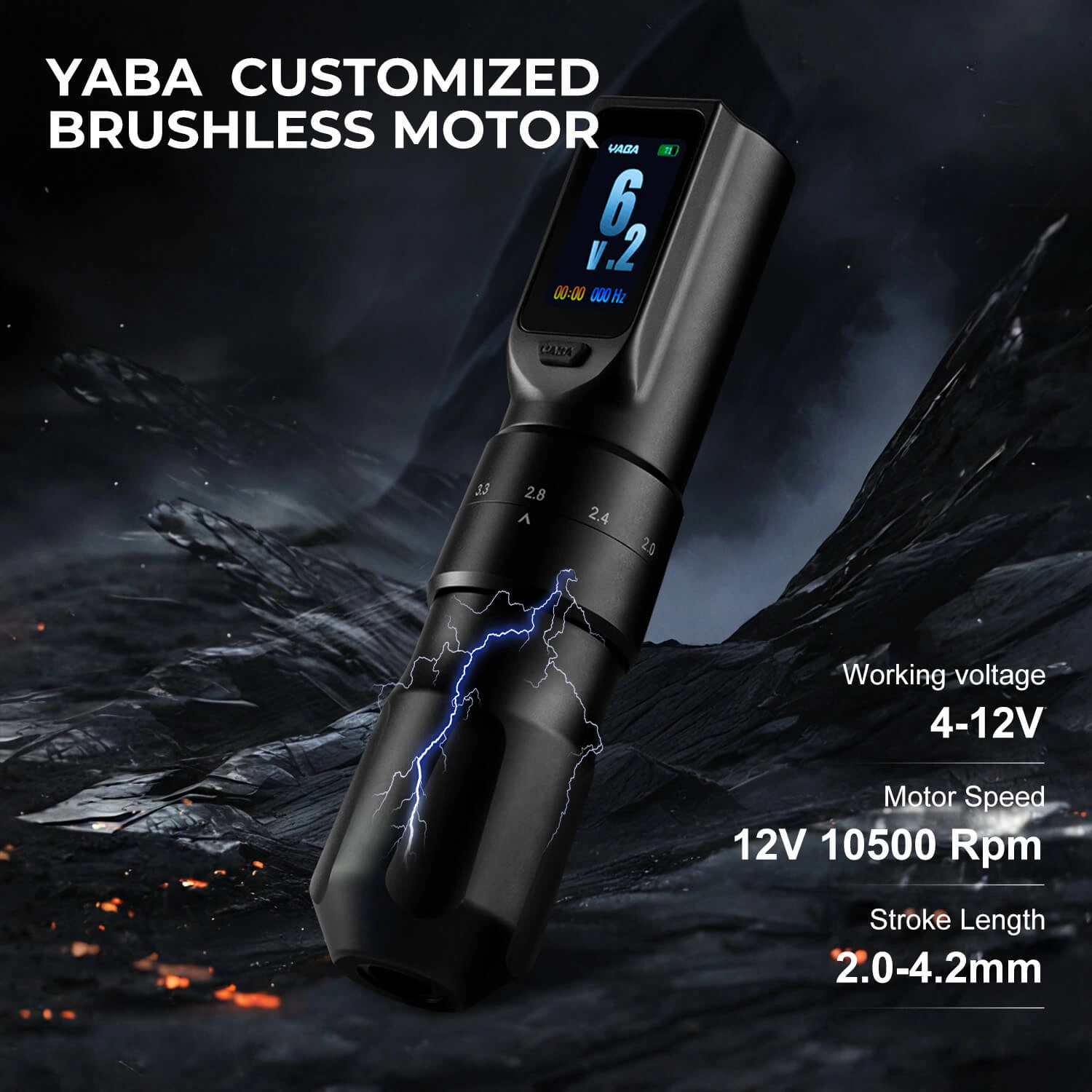
Yaba’s touch screen wireless rotary machine kits include a 2400mAh battery, type-c fast charging, adjustable stroke, dot mode, jump start, work timing/Herz function, space aluminum material, and a 38mm grip. The kit also includes one battery pen, an extra battery, an RCA plug, a clip cord, a type-c cable, and a Yaba logo box.
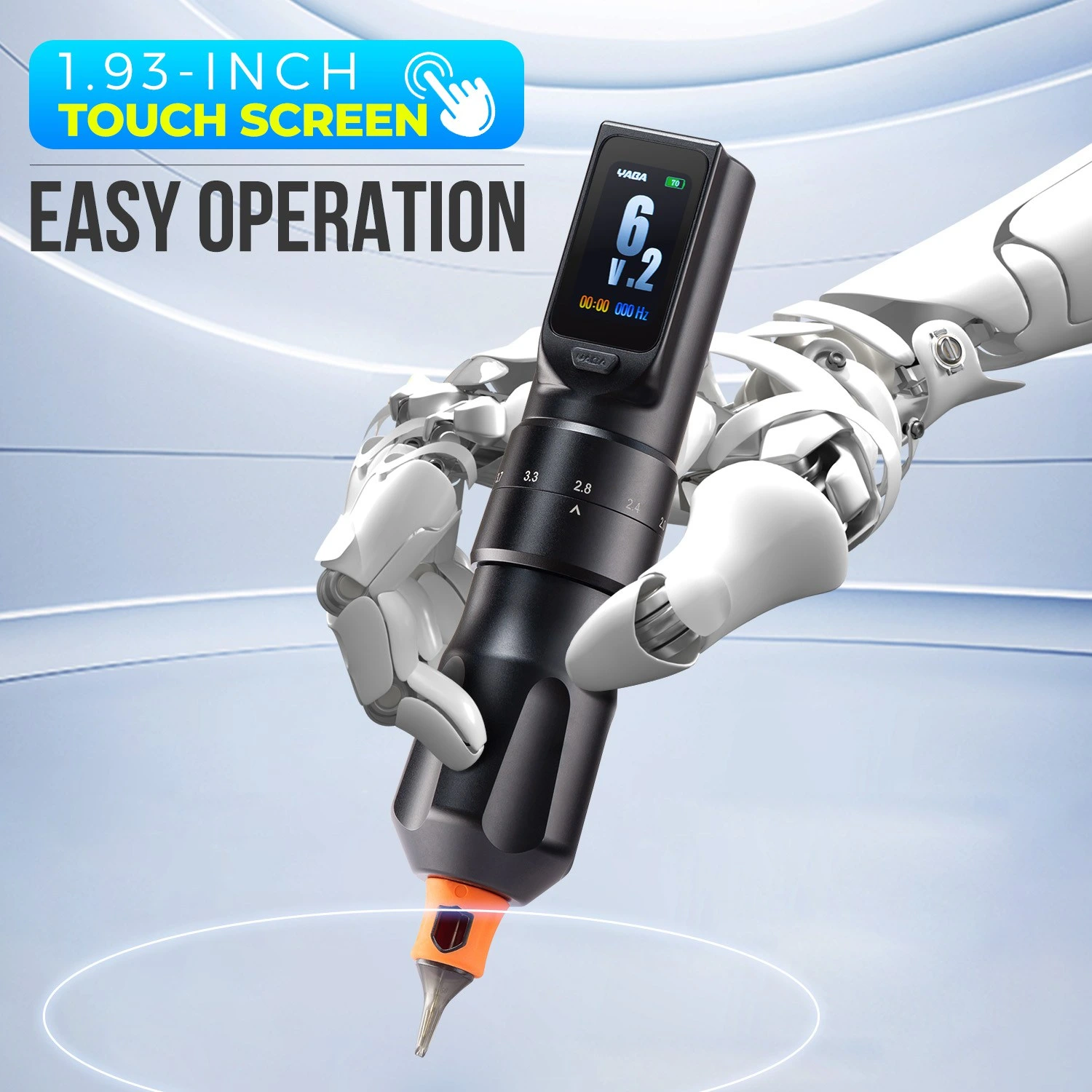
For artists, that extra battery changes the working plan. Instead of relying on one full charge for the whole day, the artist can rotate batteries. One battery powers the current session while the other stays ready for the next stage or next client.
Charging Time Is Part of Session Planning
Tattoo battery charging time is not only a technical detail. It affects booking gaps, lunch breaks, and how safely an artist can handle back-to-back appointments. A wireless tool with type-c charging is easier to manage because compatible cables and chargers are widely available.
Still, fast charging should not replace good planning. A battery should be fully charged before the first appointment. For longer days, artists should keep the spare battery charged before the main battery runs low. It is safer to swap early than to wait until the machine slows down during a critical line or shading pass.
A Simple Charging Habit for Studio Use
A clear routine helps protect the working rhythm: charge all batteries after work, check the level before the client arrives, keep the spare battery ready, and swap before long shading or color packing. Avoid running every battery down to zero each day.
This habit is simple, but it prevents many session problems. It also helps the rechargeable tattoo battery keep steadier performance over months of use.
Wireless vs. Wired Power During Long Sessions
Wireless tattoo machine kits are now strong enough for many professional tasks, but wired power still has a place. The difference is not only about strength. It is about how each power method fits the session, the artist’s hand position, and the size of the tattoo.
Cordless machines give better movement around the client, especially on arms, shoulders, legs, and positions where cord drag becomes distracting. Wired machines provide continuous power as long as the power supply is stable.
Yaba’s kit gives artists another practical option: switching to a power pack or RCA plug. This matters during long appointments. If both batteries are low or the artist wants continuous power for a large area, the machine can move to a wired connection instead of stopping the session.
How Artists Can Estimate Battery Needs Before a Booking
A good artist does not wait for the battery to fail. Battery planning should happen before the client sits down, especially for larger pieces. The goal is not to use every minute of battery power. The goal is to finish each stage with stable output.
Match Battery Use to Session Length
For short tattoos under two hours, one well-charged rechargeable tattoo battery is often enough. For medium pieces of three to five hours, a spare battery is safer. For large sessions over five hours, artists should plan battery rotation and keep an RCA or power backup nearby.
Watch for Signs of Power Drop
A wireless tattoo pen may show several signs when the battery is running low:
- Slower needle response
- Less confident hit
- More motor strain under load
- Screen or battery indicator warning
- Inconsistent feel during heavy passes
Stable power is tied to clean lines, even shading, and controlled skin trauma. When the machine begins to feel weak, artists should change batteries before the quality of the work changes.
What Buyers Should Check in Wireless Tattoo Machine Kits
For artists, students, and tattoo supply buyers, wireless tattoo machine kits should be judged as complete working tools, not only by battery size. The battery matters, but grip comfort, controls, charging method, and backup options decide whether the kit fits studio work.
A professional buyer should check:
- Battery capacity and whether an extra battery is included
- Charging port type and cable availability
- Voltage adjustment and display clarity
- Adjustable stroke and needle depth range
- Grip diameter and hand comfort
- Wired backup options such as RCA plug support
- Material strength and cleaning convenience
- Kit contents for daily work and travel
The Yaba wireless rotary machine kit supports these points with a 2400mAh battery, type-c fast charging, 0–4.2mm needle depth, 38mm grip, extra battery, and RCA plug option.
Care Tips to Keep Battery Life Stable
Battery life changes over time. Heat, deep discharge, poor charging habits, and rough storage can shorten the life of lithium-based power parts. Keep batteries away from high heat, use suitable charging cables, and store them with some charge if they will not be used for a while.
Conclusion
Wireless tattoo battery life is best judged by real working conditions, not a single advertised number. Voltage, needle grouping, stroke choice, skin resistance, and session length all affect tattoo power supply runtime. For most artists, the best answer is not just a bigger battery. It is a smarter working plan: start with a full charge, keep an extra battery ready, watch for power drop, and use wired backup when needed. Yaba’s touch screen wireless rotary machine kits support this practical approach with a 2400mAh battery, type-c charging, an extra battery, adjustable functions, and RCA switching. Artists who want a flexible wireless tattoo pen or rotary tattoo machine kit can contact Yaba for product guidance.
FAQs
Q: How long does wireless tattoo battery life usually last?
A: It depends on voltage, needle load, battery size, and session style.
Q: Does tattoo battery charging time affect professional work?
A: Yes. Shorter charging gaps help artists handle longer or back-to-back appointments.
Q: Are wireless tattoo machine kits suitable for long sessions?
A:Yes, if the kit includes spare batteries and wired backup options.