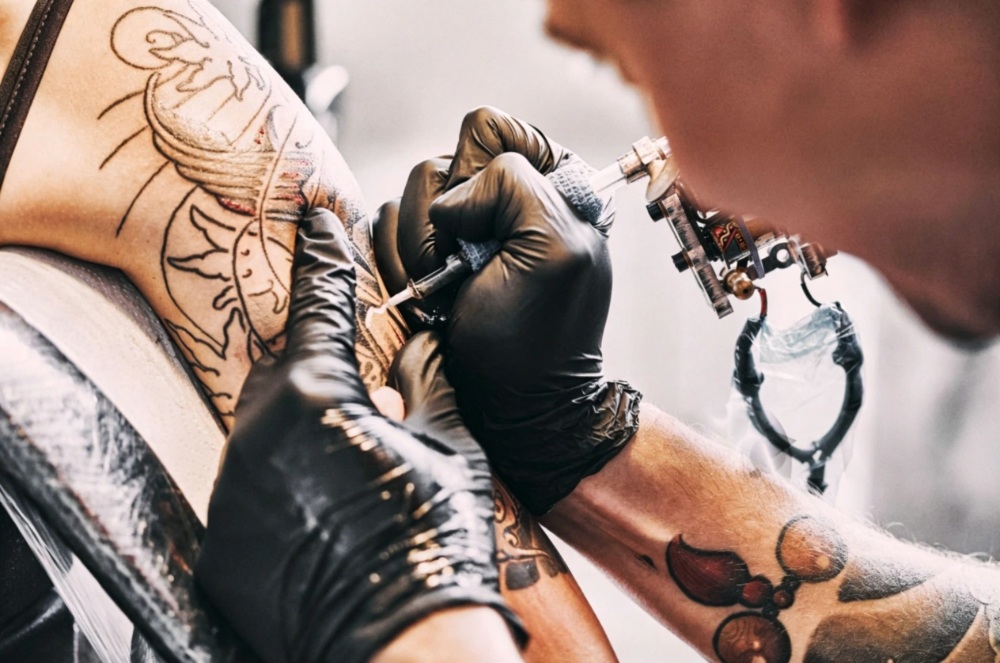
Opening your first tattoo kit brings a sense of thrill. It feels like stepping into an exciting new realm. Perhaps you watched a popular video of someone drawing a smooth line on a fruit. Or maybe you have filled notebooks with sketches for months, eager to attempt the actual process. This moment holds great significance. Yet, the initial joy can hide the tough learning path ahead. Data indicates that around 40% of new artists face difficulties in their initial year. They struggle mainly because they lack knowledge about managing their equipment.
Numerous errors by novices occur not due to missing skills but because the practical aspects of the trade prove more intricate than they appear. Topics like cleanliness rules and skin penetration depth demand close attention. Every element counts. If you aim to prevent uneven ink or, even worse, a skin infection, you must identify the typical traps. We will examine the obstacles that most newcomers encounter. Then, you can learn ways to overcome them.
The Foundation of a Safe Workspace
Prior to considering contact between a needle and skin—or even practice material—your area must be prepared. This is a point where many individuals overlook essential actions. They rush into sketching so quickly that they ignore tattooing’s true nature as a medical task. Without a clean environment, you invite problems right from the start.
Preparing a suitable tattoo kit setup goes beyond simply placing tools on a table. It requires a smooth surface that wipes clean with strong medical cleaners. You also need protective covers, such as plastic sheets or dental barriers, on all items you might contact. These measures stop the spread of contaminants. Cross-contamination can end a budding career in moments.
Essential Tattoo Hygiene Tips for Your Station
Arranging your station serves as the initial challenge to your commitment as an artist. It involves more than tidiness. Rather, it creates a protected zone free from bacterial growth. Even in a home setup, you must handle the area with professional care.
- Always use barriers: Wrap your power supply, your table, and even your spray bottles.
- Change gloves often: If you touch your phone or adjust your chair, those gloves are now dirty. Throw them away and put on a fresh pair.
- Disinfect the skin correctly: Use green soap or a specialized skin prep solution to clean the area before you start.
- Dispose of needles safely: Never just throw a used needle in the trash. Use a puncture-proof sharps container.
Adhering to these tattoo hygiene tips keeps your work secure and up to standard. Most newcomers fail to grasp how readily germs can spread. If you cannot handle the preparation properly, you are not ready to operate the device.
Technical Errors with Gear and Power
After readying the station, the following difficulties relate to the machine. Newcomers frequently purchase a kit and expect the device to perform effortlessly. In truth, you must connect with the machine. Learn its power requirements and motion patterns. One of the most aggravating elements in early learning involves equipment that seems awkward or unreliable.
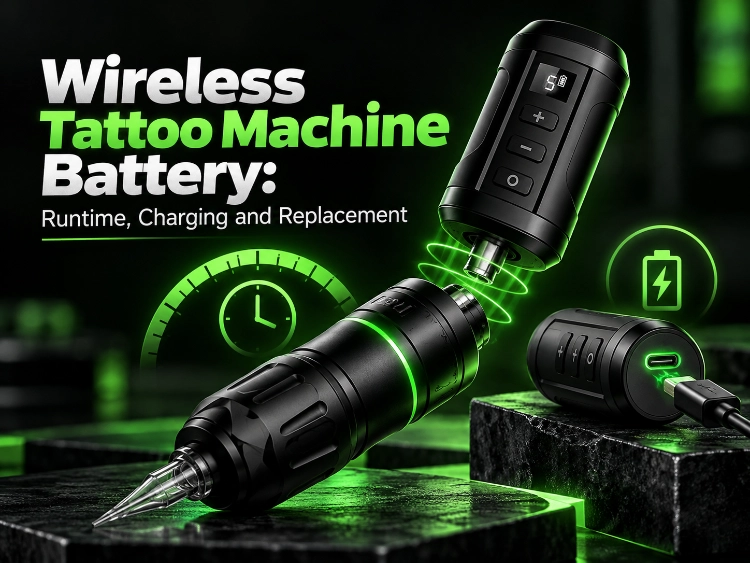
Here, the move to current tools is transforming the field. Plenty of fresh artists abandon bulky, wired systems. They opt for a wireless tattoo machine instead. Such tools provide greater ease of motion, which proves vital while you still experiment with a comfortable grip. Nevertheless, even superior gear can present power challenges.
The Problem with Incorrect Voltage Settings
Switching from a wired machine to a wireless one excites many. However, it does not resolve all issues. You still must discover the ideal speed level. A common error among beginners is setting power excessively high. They believe it speeds up ink placement. Alternatively, they choose too low a setting, making the machine catch on the skin.
Incorrect voltage settings can lead to several problems:
- High voltage: This can cause “blowouts” where the ink spreads out under the skin like a bruise. It also causes excessive skin trauma.
- Low voltage: The needle moves too slowly to break the skin cleanly, leading to jagged lines and a lot of pain for the client.
- Inconsistency: If you can’t see your voltage clearly, you won’t know why one part of your tattoo looks different from the other.
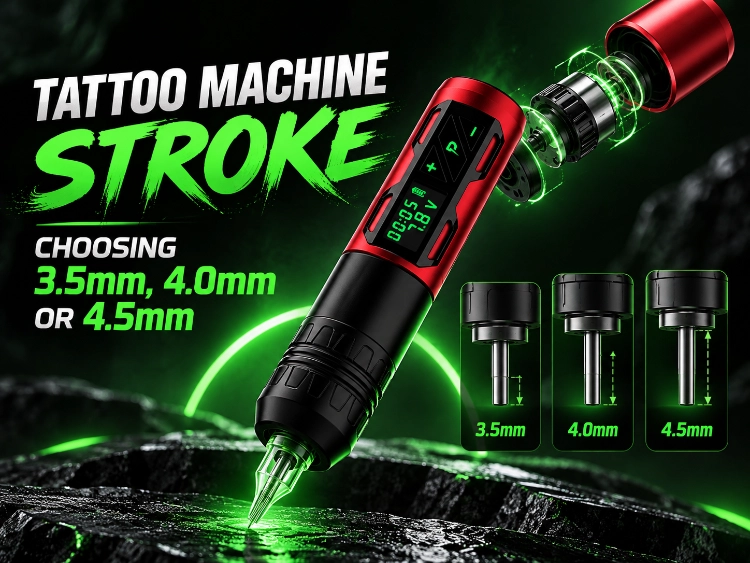
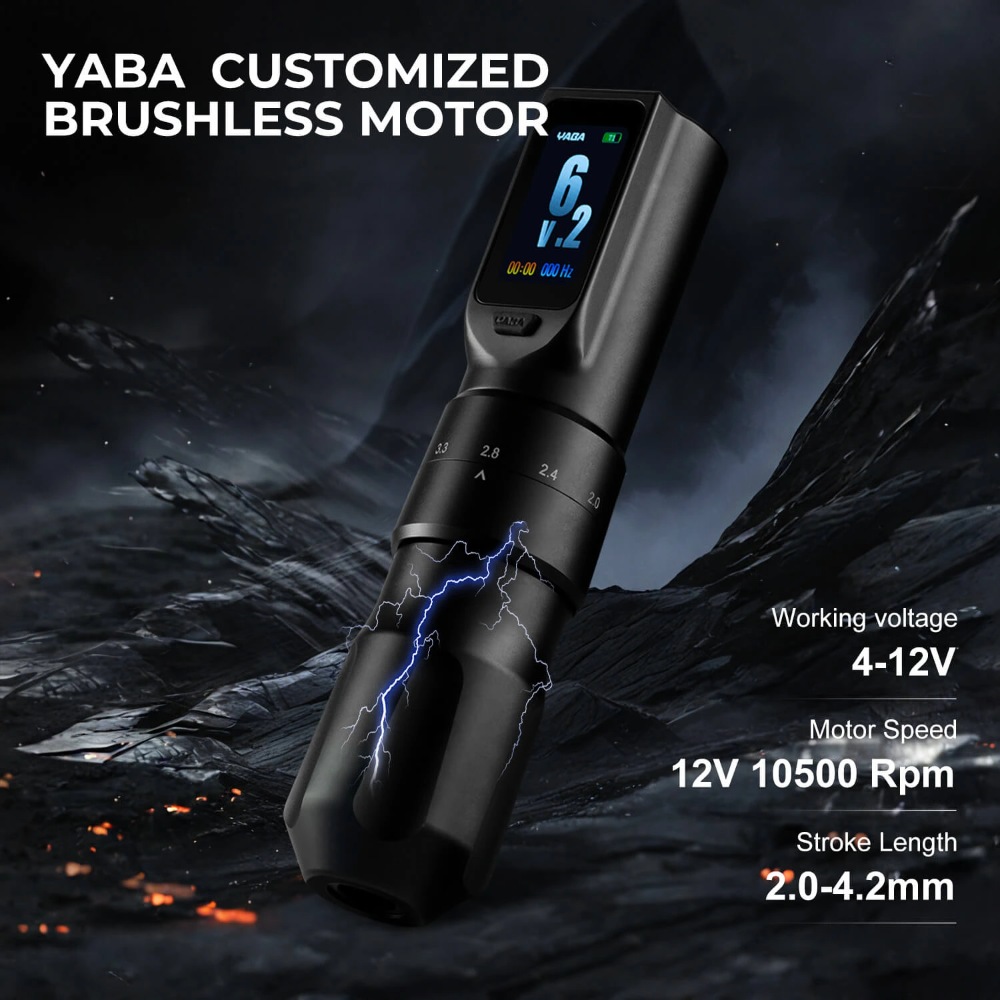
This is why many artists are switching to the Yaba Touch Screen Wireless Rotary Machine. Unlike traditional buttons that can be hard to press while you’re working, a touch screen allows for instant, precise adjustments. It takes the guesswork out of the process, helping you avoid those amateur power mistakes.
Needle Knowledge and Skin Interaction
Suppose your power level is spot on. Even then, selecting the wrong needle can spoil your efforts. Novices often view a needle assortment and assume any will do. Nothing could be less accurate. The needle’s form, quantity, and point length determine the skin’s final mark. Employing a liner for shading or a shader for delicate lines guarantees a disorganized outcome.
Choosing an unsuitable needle typically yields ink that appears blurred or strokes that grow overly bold. For instance, attempting to shade a broad zone with a tiny round liner demands endless time. It also irritates the skin. On the other hand, applying a big magnum for small features erases sharpness. You need to pair the instrument with the job at hand.
Mastering the Correct Tattoo Needle Depth
Grasping the needle covers just part of the challenge. You also must understand the penetration level. This skill stands as one of the toughest to acquire. Human skin consists of three layers: the epidermis on top, the dermis in the center, and the hypodermis at the base. Your goal is the dermis. This layer measures roughly 1.5mm to 2mm thick, similar to a coin’s width.
Penetrating too lightly into the epidermis means the tattoo will vanish during healing. Going too far into the hypodermis produces a blowout. Achieving the ideal tattoo needle depth calls for a firm grip and a machine with minimal shaking. Beginners notice uneven depth due to trembling hands or heavy devices. A well-balanced, user-friendly machine aids in holding that depth throughout the design, particularly in extended work periods.
The Importance of High-Quality Starter Equipment
We see it all the time: a beginner buys the cheapest kit they can find online and wonders why their tattoos look gray and patchy. Cheap machines often have weak motors that “bog down” when they hit resistance. This causes the needle to stutter, which is a major cause of beginner tattoo mistakes. When your equipment is fighting you, you can’t focus on your art.
Investing in a professional-grade kit early on actually saves you money. You won’t have to replace broken parts, and you won’t have to do as many “touch-ups” on your clients. High-quality tools provide a consistent hit, which makes learning the mechanics of tattooing much faster.
- Consistency: Better motors mean the needle moves at the same speed every time.
- Comfort: Lighter machines reduce hand fatigue, which is a big deal when you are practicing for 4 or 5 hours.
- Feedback: Modern machines give you better tactile feedback so you can “feel” the skin better.
If you commit to this path seriously, consider the Yaba Touch Screen Wireless Rotary Machine Kit. It helps close the divide between beginner and expert levels. The cordless feature ends the pull from wires that often messes up early strokes. Plus, the straightforward touch screen simplifies tracking your configurations.
Conclusion
Embarking on your tattoo artist path offers an amazing adventure. However, it demands steady effort and a proper outlook. Steering clear of typical novice tattoo mistakes, such as weak hygiene or wrong needle depth, marks the initial move toward professional standing. Keep in mind that every expert started as a learner who persisted. By emphasizing your tattoo kit setup and relying on dependable tools like a wireless tattoo machine, you boost your odds of achievement. Feel free to seek guidance or spend on your development. If you encounter hurdles or want suggestions on tools suited to your approach, do not hesitate to connect. We stand ready to support your progress. Please contact Yaba for any professional support you need.
FAQs
Q: How do I know if my tattoo needle depth is correct while I am working?
A: You should feel a slight vibration in your non-stretching hand and see the ink staying in the skin.
Q: Why is a wireless tattoo machine better for someone just starting out?
A: It removes cord resistance, allowing you to focus entirely on your hand movement and line precision.
Q: What happens if I use incorrect voltage settings on my machine?
A: Too high causes skin damage and blowouts; too low causes the needle to snag and pull the skin.