A tattoo setup can look organized at the start of a session and still become awkward once work begins. You reach for the power supply, adjust a light, move an ink tray, or pick up a phone. The problem is not that any one of those actions takes long. It is that the same few items keep drawing your attention away from the work.
That is where tattoo barrier film can earn its place. It gives you a simple way to cover selected equipment surfaces before you begin, then remove that layer when the session is over. It is worth buying when that small step makes your setup easier to manage. It is not a cleaning product, a promise of a sterile station, or a substitute for the rules and cleaning routine you already follow.
What Does Tattoo Barrier Film Actually Help You Manage?
The useful question is not, “Can this film cover everything?” A better question is, “Which parts of my setup do I touch again and again?” Once you know that, barrier film becomes a practical accessory instead of another roll sitting in a drawer.
Think about the items that sit within easy reach throughout a session. A power supply, a lamp control, a machine stand, a tray edge, or a nearby device may all become part of the same working rhythm. A removable cover can make those chosen areas simpler to reset afterward. The point is to plan the working surface before the session begins, not to improvise every time you change tools.
That distinction matters. A cover creates a cover. It does not clean equipment for you, and it does not remove the need to follow local requirements, product instructions, and your own cleaning process. When you keep that boundary clear, the product has a useful and honest job.
Which Parts of Your Setup Make a Small Sheet Worth Reaching For?
Start with reach, not with a list copied from someone else’s station. If you always touch the same control with your gloved hand, that item deserves more thought than something you never handle once the session starts. If your work moves around a client, the surface you need may change with the position of the chair, lamp, or machine.
Small barrier film sheets work best when the target is also small and specific. A power display, a switch panel, a tray corner, or another compact contact point may be easier to plan for than a broad bench or chair. This is why the size of the sheet matters more than the word “barrier” on the box. A sheet that is too large can create extra clutter. A sheet that is too small for the surface does not solve the problem either.
Your setup should still feel usable. You need to see controls, reach adjustments, and move safely around the client. Do not cover an item in a way that hides essential controls, blocks airflow, or conflicts with its instructions. The best choice is the one that supports your normal movement instead of making every adjustment harder.
Why Can Pre-Cut Sheets Feel Easier Than a Large Roll?
A large roll can be useful when you need broad coverage. It also asks you to measure, pull, and tear each piece while you are setting up. For small, repeated contact points, that extra step can be more trouble than it is worth.
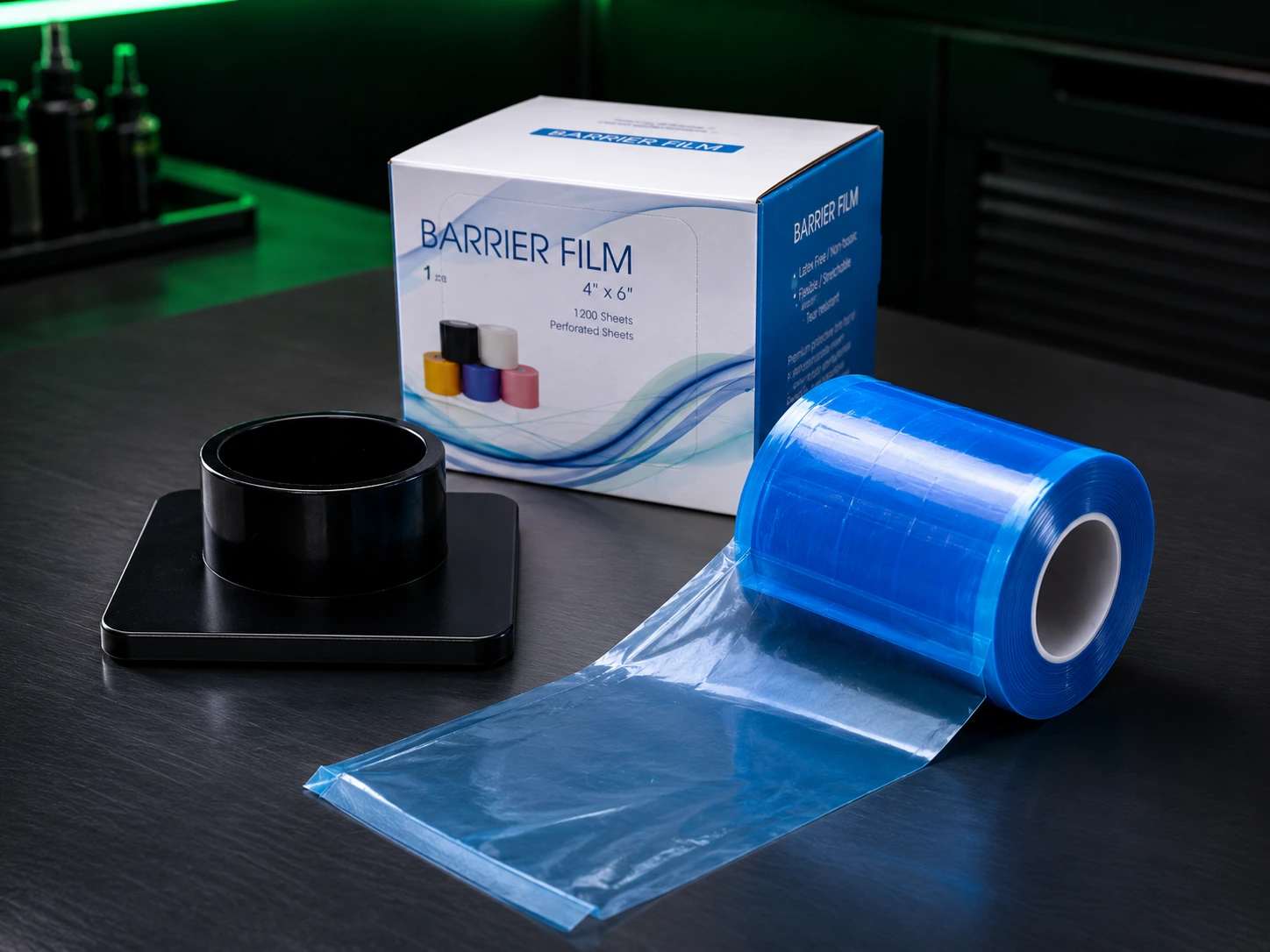
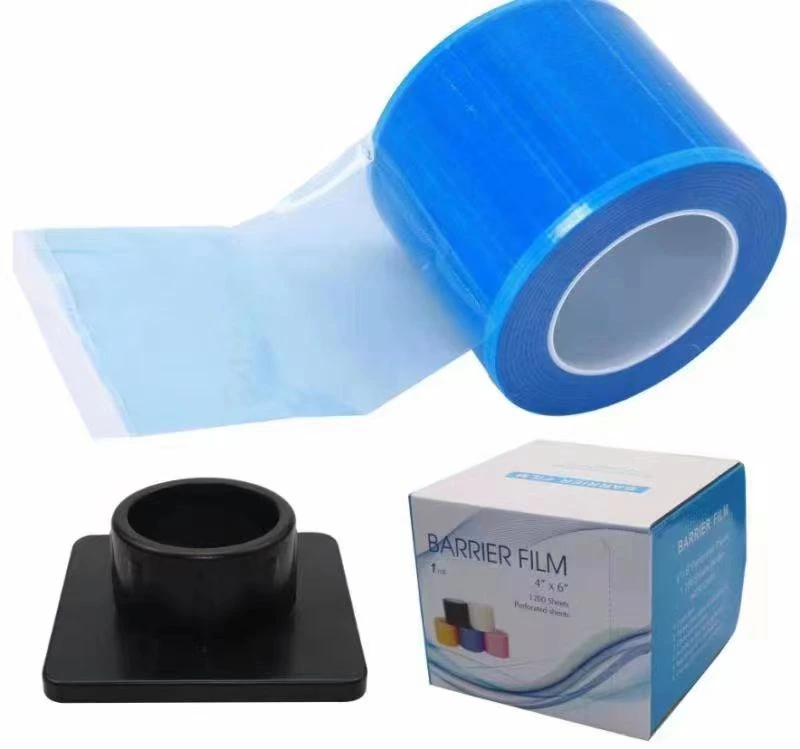
YABA’s blue barrier film with dispenser uses pre-cut 4 x 6 inch sheets. One roll contains 1,200 sheets, or 600 feet of film, and the sheets can be pulled from either the included stand dispenser or the box. Those are simple product details, but they change the buying decision. You are choosing a fixed, ready-to-pull format instead of deciding the size of every piece as you work.
That format is most useful when you want consistency. The same size sheet helps you judge where it fits before the session starts. The dispenser also gives the roll a defined place on the station, which can be easier than searching for the loose end of a larger roll. It does not make the setup automatic. It simply removes one small decision from a routine that already has many of them.
The difference becomes clearer when your station has a tight footprint. In that situation, a box of small sheets can be easier to place than a large roll that needs room to unspool. If your main issue is reach and clutter rather than a lack of supplies, you may also want to compare the setup ideas in YABA’s tattoo workstation guide. Better placement and a better barrier format solve different parts of the same problem.
Where Does Barrier Film Stop Helping?
Barrier film has clear limits, and those limits should guide the purchase. It is not a replacement for cleaning equipment. It cannot make an unsuitable surface suitable to cover. It also cannot tell you which areas need attention in your own studio or under local rules.
It is also different from a film used on a fresh tattoo. The product in this article is an equipment accessory for your working area. It is not an aftercare dressing, and it should not be discussed as one. Keeping those two products separate prevents a common mistake: assuming that any film sold for tattoo use has the same job.
Do not buy a box of sheets because the word “barrier” sounds complete. Buy it because you have a few real touch points that would be easier to prepare with a removable, pre-cut layer. If the surface is too large, too hot, too irregular, or controlled by special product instructions, this format may not be the right answer.
How Can You Tell Whether a 1,200-Sheet Box Fits Your Routine?
The number on the box should make you think about use, not push you to buy more than you need. A 1,200-sheet roll is practical when you have recurring sessions and a stable group of compact surfaces you want to prepare. It gives you enough sheets to make the same setup choice consistently instead of treating every session as a new experiment.
First, picture one normal appointment. Which pieces do you touch most often? Which of those pieces are small enough for a 4 x 6 inch sheet? Which can stay visible and easy to use after they are covered? Your answers will tell you more than a generic checklist.
Then look at storage and access. The YABA format can dispense from the box itself or from the included stand. If you have a fixed work area, the stand may help keep the roll in one predictable place. If you work from a compact cart or move between spaces, using the box may be the simpler option. Neither choice changes the product’s role. Both are about making it easy to take a fresh sheet when you have already decided it belongs there.
For a closer look at the format, the YABA tattoo accessories collection can help you compare it with other small setup items. Keep the comparison focused. A good accessory reduces a specific friction point; it does not need to become the center of your whole workflow.
Should You Buy Tattoo Barrier Film for Your Own Setup?
Tattoo barrier film is worth buying when it helps you manage the compact, high-touch parts of your own setup without creating new clutter. The value is not a dramatic promise. It is the calmer feeling of knowing that the items you reach for most have already been considered before the session starts.
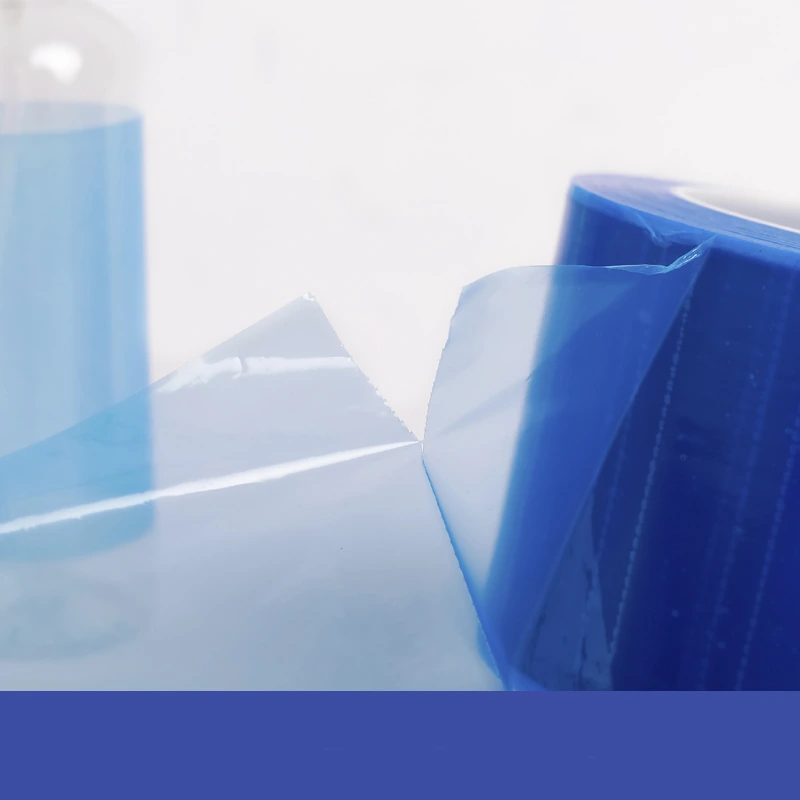
YABA’s 4 x 6 inch barrier film sheets give you a blue, pre-cut option in a 1,200-sheet roll, with dispensing from the box or the included stand. Compare that format with the size of your usual touch points and the way you set up your station. If the sheets fit both, they can be a useful addition to the supplies you already rely on.
What Else Should You Know Before Buying Tattoo Barrier Film?
Q1:Is tattoo barrier film the same as second-skin tattoo film?
A1:No. This article covers equipment barrier film for selected work-area surfaces. Second-skin film is an aftercare product used on a fresh tattoo. They have different jobs and should not be used as if they were interchangeable.
Q2:How many barrier film sheets should I use in one session?
A2:There is no universal number. Base the decision on the compact surfaces you touch repeatedly, the instructions for the equipment, and the rules that apply where you work. The goal is a setup you can manage consistently, not the largest possible amount of coverage.
Q3:Can barrier film replace cleaning my tattoo equipment?
A3:No. A barrier is a removable layer, not a cleaning method. Continue to follow the cleaning requirements, equipment instructions, and local rules that apply to your work.