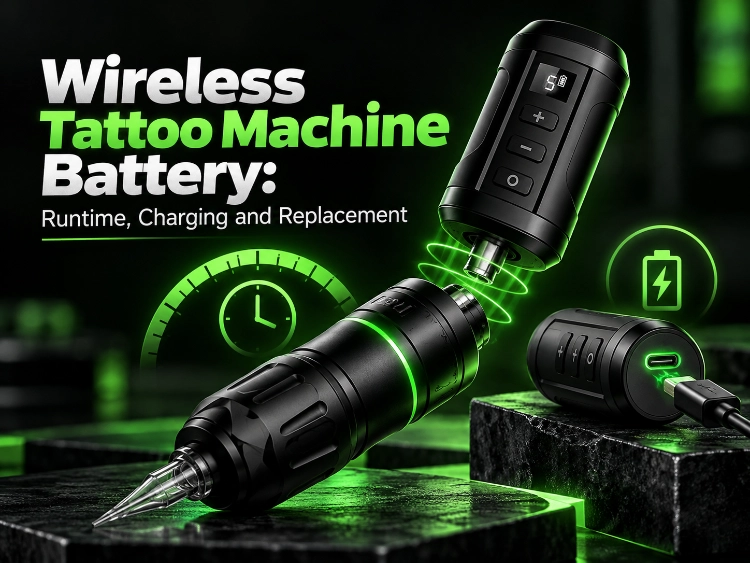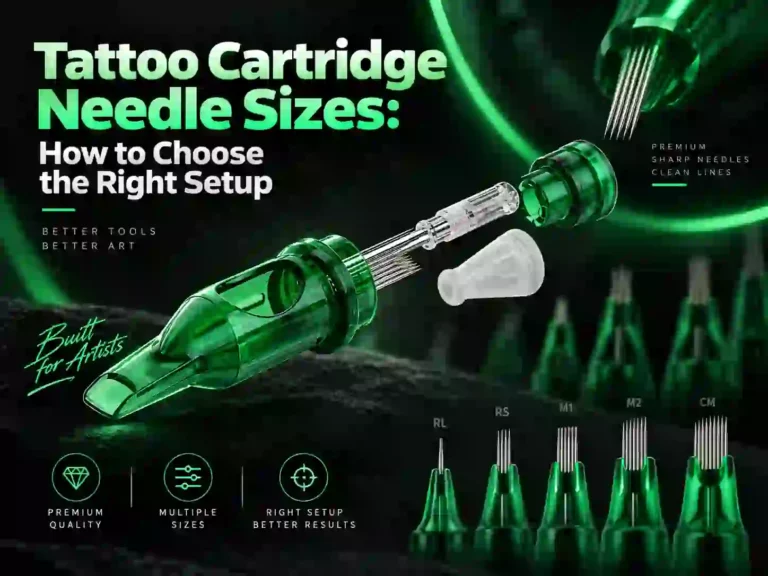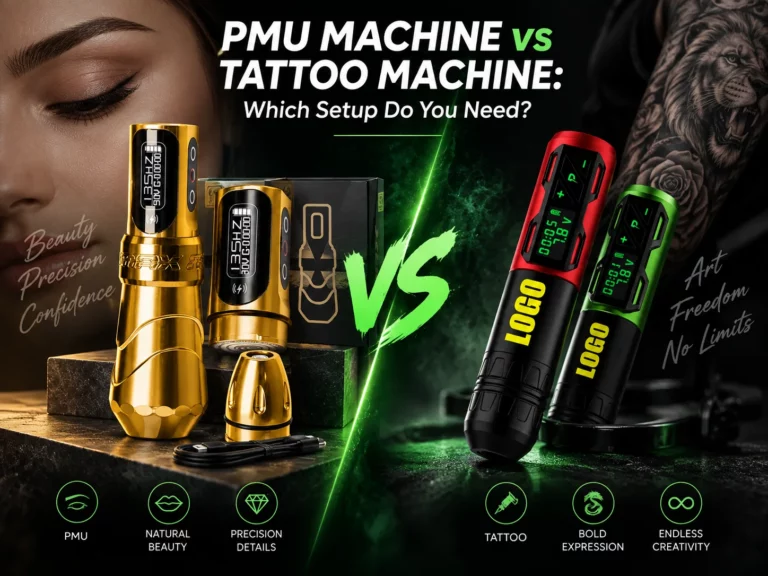
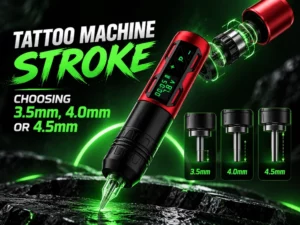
Same voltage, two machines, two different feels. One buzzes bright and fast. The other feels loaded. The cartridge is identical in both. Stroke length explains most of it.
The range carries the three settings most artists meet. 3.5mm on the EZ Tattoo Astral rotary and the Inkone pen. 4.0mm and 4.5mm on the Rampage direct-drive machine, depending on the version. 4.5mm on the Archer Ultra. Wenngleich publishes each figure beside the machine it belongs to. Needle travel drives the feel, and those three figures cover most of the work artists argue about.
What Stroke Length Changes
Travel, Not Needle Depth
Stroke is the distance the drive pin covers per cycle. Needle depth is how far the needle projects past the cartridge tip. The two are set in different places. Depth sits at the cartridge and the grip. Stroke sits inside the machine.
A 4.5mm machine with the needle set shallow still hits light. A 3.5mm machine with the needle set deep still travels short. Reading one figure as a promise about the other is where most setup mistakes start.
Hit Rate and Force
Longer travel per cycle means fewer hits per second and more weight behind each one. Ink goes in fast, and the machine pushes back against the hand. The trade is force against speed. Hit rate matters on shaded work where the artist returns to the same area, and force matters on lining where every pass has to land. A faster cycle also covers more ground before the arm repositions.
Shorter travel brings the hits faster and lighter. Multiple passes stay comfortable, and colour builds in layers.
Fixed Stroke, Adjustable Needle Length
Some machines fix the stroke at the factory. The EZ Tattoo Astral rotary ships with a 3.5mm stroke, and the Rampage comes as a 4.0mm or a 4.5mm version.
Other machines move the needle setting instead. The Inkone pen lists a 3.5mm stroke and adjusts needle length by turning the base, so the working projection changes while the stroke figure stays as listed. An artist who lines one day and shades the next gets more from that adjustment than from a single depth setting.
Matching Stroke to the Work
The 3.5mm Setting
Yaba’s copy calls 3.5mm the setting that does a bit of everything. Artists use it that way. It lines without much force and shades without effort, and single-machine setups usually land on it.
A 3.5mm pen travels light. Small pieces, sessions that switch technique, guest spots where one machine goes in the case: that is 3.5mm territory. The EZ Tattoo Astral rotary carries that figure with three interchangeable plunger bars.
4.0mm and 4.5mm Settings
The Rampage page makes its case for 4.0mm: strong, bold lines with enough adjustment for softer shading, and one machine for both inside a piece.
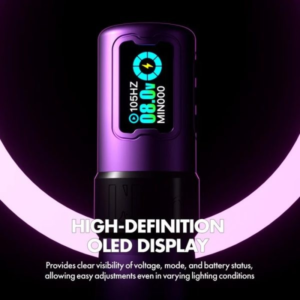
The same page lists what that setting suits. Shading and packing colour across medium and large areas. Gradient transitions that stay smooth. More force than a 3.5mm stroke. Bold lines and solid colour fills, and the traditional look that goes with them. It also lists the 4.5mm version beside the 4.0mm for artists who want the longer travel.
Three Variables Beside Stroke
Three variables sit beside stroke. The client’s skin decides how much force a session tolerates. Machine weight decides how the artist holds it by hour three. Voltage sets the pace.
A 197g pen and a heavier machine behave differently on the same stroke figure, and the gap shows up late in a sitting. Two machines can carry the same number in the title and feel nothing alike in the hand.
Reading Stroke on a Product Listing
What the Listing States
A stroke figure appears in the product title or the specification table. Rampage lists 4.0/4.5mm. The Astral rotary lists 3.5mm. The Inkone pen lists 3.5mm. The Archer Ultra lists 4.5mm. The range carries three figures across four machines. The figure never says who should use which.
Stroke, weight and connection sit on the same table, and all three travel together in the decision. An RCA machine and a pen machine rarely swap without an adapter. The stroke figure survives the swap. The balance does not.
What the Figure Leaves Out
Three things the figure misses decide the feel. The drive: direct or geared. The machine’s weight in the hand. The grip and cartridge interface, which set the working projection.
Yaba’s note on machine feel says the same: the screen number works with the drive and with the cartridge.
Stroke With Voltage and Cartridge
Stroke works with two other settings. Take the Inkone pen, which runs from 5V to 12V in 0.1V steps with a 3.5mm stroke. At 6V and at 12V the same figure feels different in the hand. A tighter grouping concentrates the hit into a smaller area.
Setting the three together is the job. Stroke sets character, voltage sets pace, cartridge sets where ink lands.
Building a Setup Around Stroke
One Pen Covering Two Jobs
A pen that moves its needle setting lets one machine cover two jobs. Turning the base on the Inkone pen shifts the working projection between jobs, which absorbs a mid-project change without a second machine. The artist makes the call before the client sits down.
The compromise shows up in the middle. One machine covering both jobs rarely matches a dedicated machine at either.
Two Machines for Two Jobs
A second machine solves what adjustment cannot. Each machine carries its own cell, and a flat cell stops one machine rather than the day. A 3.5mm pen shades and lines small work. A 4.0mm or 4.5mm machine takes lining, packing and large areas.
Two machines cost more and add weight to the bag. The second machine removes the compromise. Artists who book long lining projects usually end up there.
Abschluss
Stroke sets how a machine hits: travel per cycle, hit rate and force. Read the number on the listing, then read everything it leaves out. Weight, grip and drive decide the feel behind that number. Match a 3.5mm setting to mixed work, a 4.0mm or 4.5mm setting to lining and packing, and set the voltage for the job in front of the artist.
Häufig gestellte Fragen
Q1: What stroke length should a beginner choose?
A1: 3.5mm covers the widest range of work, which is why Yaba’s copy calls it the setting that does a bit of everything. It lines, shades and travels well as a single machine, and the EZ Tattoo Astral rotary carries that figure.
Q2: Does a longer stroke mean a deeper needle?
A2: No. Stroke is the travel of the drive pin per cycle, while needle depth is set by the cartridge and the grip. A long stroke changes the force and rate of each hit travelling through that depth.
Q3: Can one machine handle lining and shading?
A3: Yes, and the Rampage page makes that case for 4.0mm, listing bold lines and colour packing on the same machine. A pen with an adjustable needle setting covers the same ground from the other direction, letting the artist move the working projection between jobs.