Les photos de tatouages récents sont souvent moins flatteuses que le tatouage lui-même. Les lignes peuvent être nettes, les couleurs harmonieuses et la peau impeccable sous l'œil du tatoueur, mais l'appareil photo capte une brillance excessive. Résultat : une photo qui masque les détails au lieu de mettre en valeur le travail.
Ce problème ne se limite pas aux réseaux sociaux. Les studios utilisent les photos pour leurs portfolios, les dossiers clients, les supports de formation, les pages revendeurs et les démonstrations de produits. Si chaque image présente des reflets, un éclairage inégal ou une texture délavée, le studio perd l'un de ses moyens les plus simples de présenter un travail homogène.
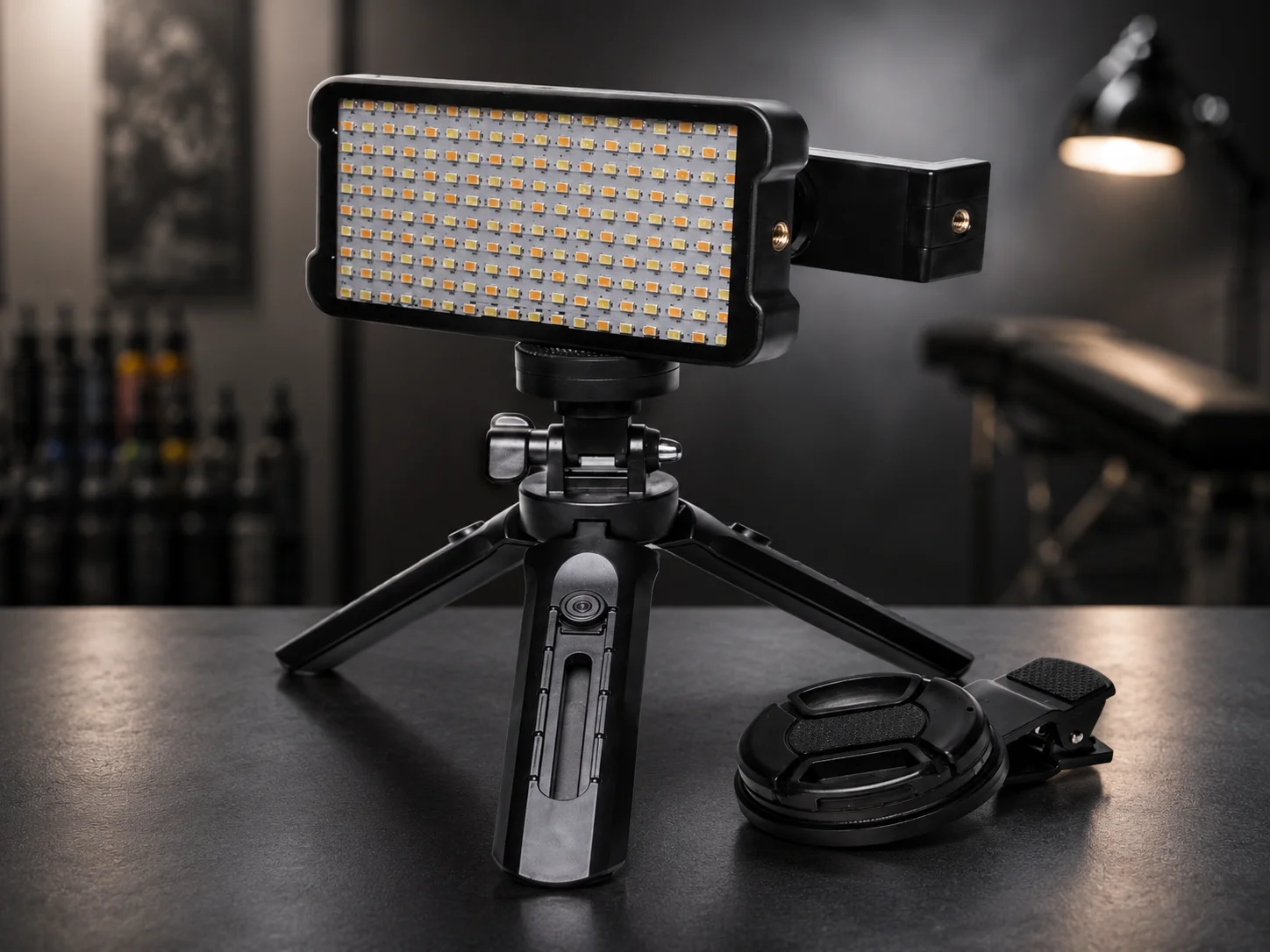
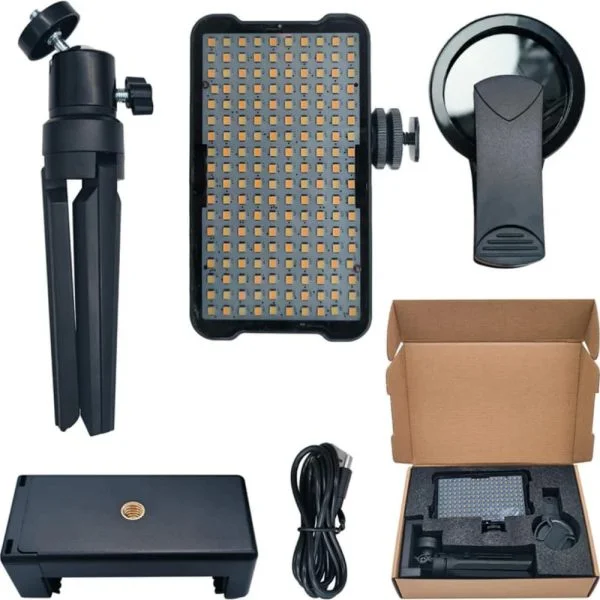
UN kit de photographie de tatouage Offre aux artistes une méthode plus précise pour immortaliser leurs nouvelles créations. À titre d'exemple, le kit anti-reflets 3.0 pour la photographie de tatouages professionnels, équipé de 120 LED, est un produit YABA. Il ne remplace pas une bonne technique de tatouage ni un éclairage adapté. C'est un outil photo destiné aux studios qui souhaitent obtenir des images plus nettes et plus homogènes de leurs tatouages, maquillages permanents et détails de produits.
Pourquoi les photos de tatouages récents paraissent-elles brillantes ?
L'encre fraîche et l'éclat de la peau reflètent la lumière
Un tatouage récent peut paraître brillant car la surface de la peau reflète la lumière de plusieurs directions. Une lampe de plafond, le flash d'un téléphone, une fenêtre ou une lampe de travail peuvent tous éclairer la même zone et créer une tache blanche sur la photo. L'appareil photo analyse alors cette réflexion lumineuse avant de traiter les traits ou la densité des couleurs.
C’est pourquoi un tatouage peut paraître intense en réalité, mais fade en photo. Le problème ne vient pas toujours de l’appareil photo, mais souvent de l’angle et de l’intensité de la lumière qui éclaire la peau.
Les appareils photo des téléphones portables agrandissent les petits reflets
De nombreux studios réalisent rapidement des prises de vue avec un téléphone. C'est courant, mais les appareils photo des téléphones ont souvent tendance à accentuer automatiquement les hautes lumières et à lisser les détails. Lorsqu'un téléphone détecte une zone brillante, il peut surcorriger l'ensemble de l'image. Les lignes sombres s'adoucissent, les tons rouges paraissent trop vifs et la texture réelle de l'image devient difficilement perceptible.
Dans les petites pièces, il est plus difficile de contrôler la lumière.
Les salles de tatouage sont souvent conçues pour le travail, pas pour la photographie. Une lampe puissante peut être placée pour améliorer la visibilité, un accoudoir peut masquer un côté de la photo et un mur sombre peut altérer la balance des couleurs. Un petit studio peut néanmoins prendre des photos exploitables, mais il lui faut un moyen simple de rendre la lumière plus prévisible.
Quand un kit photographique est-il plus performant qu'une lampe classique ?
Les lampes de travail sont conçues pour voir, pas toujours pour tirer.
Une lampe de travail classique permet à l'artiste de bien voir la peau pendant la séance. C'est différent de l'équilibre d'une photo. Les studios qui utilisent déjà un éclairage puissant configuration d'éclairage de studio Il faudra peut-être tout de même prévoir un outil distinct pour les photos en gros plan, car l'angle de prise de vue n'est pas le même que l'angle de travail.
Un kit d'éclairage dédié à la photographie s'avère utile lorsque l'artiste a besoin d'une source de lumière plus contrôlée à proximité de l'appareil. Au lieu de compter sur la lumière ambiante pour convenir à tous les angles, le photographe peut placer la lumière exactement là où l'appareil en a besoin.
La conception anti-reflets contribue à réduire la tache blanche brillante.
Le nom du produit YABA met en avant un kit anti-reflets 3.0. Pour un studio, l'idée est simple : réduire les reflets gênants qui masquent les contours et les couleurs. Moins de reflets permettent de mieux visualiser les contours, l'équilibre des couleurs et les détails du maquillage permanent sans donner à la peau un aspect trop brillant.
Cela ne signifie pas que chaque photo devient automatiquement parfaite. L'artiste doit toujours ajuster la distance, l'angle et l'arrière-plan. Mais le kit offre au studio un point de départ reproductible.
Les photos réutilisables sont importantes pour les courtes vidéos et les portfolios.
Les studios ne se contentent plus d'une seule photo finale. Les artistes prennent souvent un gros plan, une courte vidéo, une comparaison avant/après cicatrisation, et une photo du produit ou du poste de travail. Un éclairage homogène permet à l'ensemble des photos de donner l'impression de provenir du même studio, plutôt que d'être un assemblage de clichés pris au hasard avec un téléphone.
Qu'est-ce qui rend le kit YABA utile pour la création de contenu en studio ?
Les 120 perles LED fournissent une source lumineuse définie
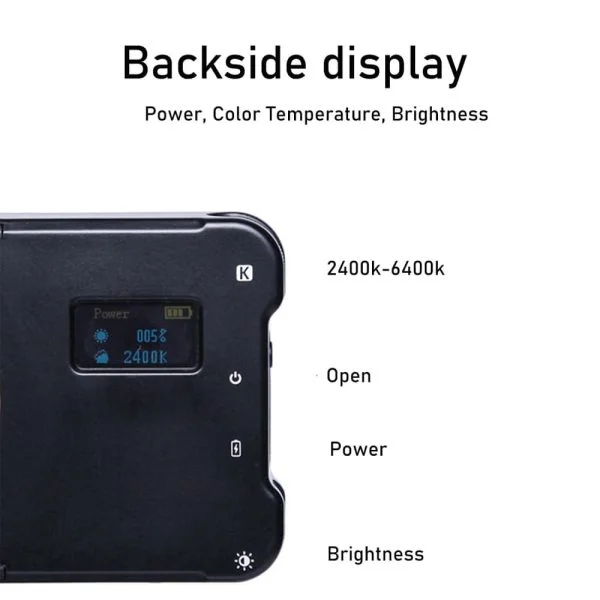
Le Kit anti-reflets YABA Elle est conçue autour de 120 LED, offrant ainsi au photographe une source de lumière claire et précise. Ce détail est important car les photos en studio nécessitent une luminosité suffisante sans pour autant surexposer la peau. Une lumière trop faible peut créer des ombres ; une lumière incontrôlée peut provoquer des reflets.
Le kit convient aux photos de tatouages et de maquillage permanent en gros plan
Le rendu des tatouages et du maquillage permanent dépend souvent des petits détails. Les tatouages aux lignes fines, les sourcils, les lèvres et les petits détails cicatrisés peuvent se déformer en cas de lumière irrégulière. Un kit photo compact est utile car il permet à l'artiste d'approcher la lumière du sujet sans transformer toute la pièce en studio photo.
Pour les entreprises qui proposent des formations, des photos après intervention ou du contenu produit, il s'agit de bien plus qu'une simple amélioration esthétique. Des images de meilleure qualité permettent au client de comprendre plus rapidement le résultat.
Cela permet aux boutiques d'avoir une routine de contenu plus professionnelle.
Les meilleures photos de studio sont généralement le fruit d'habitudes bien ancrées : même arrière-plan, même distance, même éclairage, même nom de fichier. Un kit comme celui-ci permet à l'équipe de créer un petit espace photo utilisable après les séances, pendant les formations ou pour la prise de photos détaillées des produits destinés à une boutique en ligne.
Comment de meilleures photos peuvent-elles favoriser la croissance d'un studio ?
Un portfolio a besoin de détails précis, pas seulement d'un bel éclairage.
Un portfolio doit permettre d'évaluer la qualité du trait, les dégradés, le placement des couleurs et la symétrie du maquillage permanent. Si des reflets masquent le centre du dessin, le spectateur ne peut pas apprécier le travail de l'artiste. Des photos plus nettes rendent le portfolio plus utile pour les clients et plus cohérent pour l'équipe du studio.
La formation et l'évaluation interne deviennent plus faciles
Les photos sont également utiles en studio. Les artistes peuvent comparer leurs travaux au fil du temps, les formateurs peuvent analyser les techniques et les responsables peuvent conserver des exemples de différents styles ou services. Un système d'images standardisé réduit le risque qu'une mauvaise photo soit interprétée à tort comme un travail de mauvaise qualité.
Les revendeurs et les propriétaires de marques ont besoin de meilleures images de produits
Pour les acheteurs de matériel de tatouage, les images alimentent les pages produits, les catalogues et les contenus pour les réseaux sociaux. Un studio ou un revendeur peut utiliser le même kit pour photographier les outils, les emballages et les petits détails des produits. Ainsi, le kit peut servir à bien plus qu'au portfolio d'un seul artiste.
Que doivent vérifier les studios avant d'ajouter ce kit ?
Vérifiez d'abord le cas d'utilisation de la photo
Un salon de tatouage doit d'abord définir le type de photos qu'il souhaite prendre : gros plans de tatouages frais, maquillage permanent des sourcils, photos de tatouages cicatrisés, photos de produits ou courtes vidéos. Chaque situation peut nécessiter une distance, un arrière-plan et un angle de prise de vue différents. Un objectif clairement défini permet au client de choisir la quantité et les accessoires adaptés.
Renseignez-vous sur vos besoins en emballage et en approvisionnement en vrac.
Les studios, les distributeurs et les organismes de formation peuvent avoir besoin de plusieurs unités. Avant de passer une commande importante, les acheteurs peuvent se renseigner sur l'emballage, les pièces détachées, l'étiquetage et la fourniture par lots. Si une marque a besoin d'un emballage personnalisé ou d'un ensemble de produits, YABA OEM/ODM peut faire partie de cette discussion.
Veillez à ce que la configuration soit suffisamment simple pour être répétée.
Le meilleur équipement est celui que l'équipe utilise réellement. Si l'installation prend trop de temps, les artistes finiront par prendre des photos au hasard avec leur téléphone. Un poste photo pratique doit être facile à placer près de la chaise, rapide à régler et suffisamment simple pour que tous les membres de l'équipe puissent l'utiliser de la même manière.
Conclusion
Les photos de tatouages récents paraissent souvent surexposées car la peau, l'encre, l'éclairage ambiant et les appareils photo des téléphones ne sont pas toujours compatibles. Un outil photographique performant offre aux studios un meilleur point de départ pour des images de portfolio plus nettes, des photos de détails de maquillage permanent, des vidéos courtes et du contenu produit. Le kit anti-reflets à 120 LED de YABA constitue une solution pratique pour les studios qui souhaitent un meilleur contrôle de leurs photos sans avoir à aménager un studio photo complet. Pour les studios ou les distributeurs qui prévoient de créer du contenu, la prochaine étape consiste à… contacter YABA pour plus de détails sur le produit, les options d'emballage et les besoins en images d'exemple.
FAQ
Q1 : Pourquoi les photos de tatouages frais ont-elles l'air brillantes après la séance ?
A1 : La peau fraîche peut refléter la lumière des lampes, des fenêtres ou du flash d’un téléphone. Lorsque l’appareil photo capte ce reflet, cela peut créer un halo lumineux qui masque les contours et les détails de couleur.
Q2 : Un kit de photographie de tatouage est-il différent d'une lampe de travail classique ?
A2 : Oui. La lampe de travail sert principalement à améliorer la visibilité pendant la séance. Un kit de photographie de tatouage permet de contrôler l’apparence du tatouage sur les photos, notamment les gros plans pour le portfolio.
Q3 : Un seul kit peut-il être utilisé pour les tatouages, le maquillage permanent et les photos de produits ?
A3 : Dans de nombreux studios, oui. La même configuration photo peut permettre de réaliser des gros plans de tatouages, des photos de détails de maquillage permanent, des images de petits produits et de courtes vidéos, moyennant un ajustement de la distance et de l’angle.