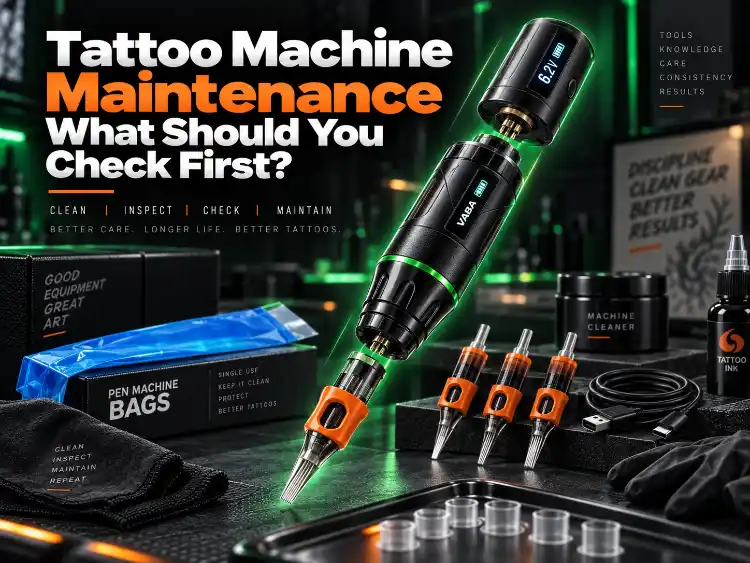
Tattoo machine maintenance should begin with a stop-use check, not a repair attempt. The first question is whether the machine still behaves normally: check accessible condition, cables or battery connections, sound, speed, and needle motion before the next session. If something has changed, stop and confirm the exact model and symptom instead of continuing with a machine that may need service.
A practical routine keeps maintenance inside safe boundaries. The artist can inspect the exterior, remove disposable parts, clean only the areas the manufacturer allows, store the machine consistently, and plan bag reorders before supplies run low. Internal repair, disassembly, and any procedure outside the published instructions belong with qualified service.
Start with a Daily Stop-Use Checklist
A maintenance routine is only useful when it catches changes early. Put the machine through the same short check before the first appointment and after cleaning. The point is not to repair everything at the station; it is to notice what has changed and decide whether the machine is still suitable for work.
Check Exterior Condition, Cables, and Battery Connections
Begin with what can be seen and handled safely with the machine disconnected from power. Look for visible damage, looseness, debris around accessible areas, and any cable or battery connection that no longer sits as it normally does. Rotate through the same checks so a small difference is easier to notice.
After every use, disconnect the machine from its power. Wipe outside areas with cleaning wipes. Take out throw-away parts like cartridges. Use a soft brush or cloth to remove ink bits from small spaces. Follow maker rules before using cleaning liquids, and do not open the housing or force a connection into place.
Look for Changes in Noise, Speed, or Needle Motion
Dirty or badly oiled machines can make uneven needle action. This leads to rough lines or spotty shading. A machine can also look clean and still sound different, run at a changed speed, or show inconsistent needle motion. Treat any persistent change as a reason to stop and inspect before the next session.
Look for hints like louder sounds, uneven needle going in, or slower motor speed. These might show worn O-rings or out-of-line drive bars. They need new ones. Avoid running the machine continuously without planned stops, and use the specified power source for the model.
A single unfamiliar sound is enough to stop and investigate. Record what changed, when it started, and whether the issue appears with a particular cartridge, battery, or power setting. That information is more useful to a qualified service contact than a general statement that the machine “feels wrong.”
Clean Within Manufacturer Boundaries
Cleaning supports maintenance, but it should not become an uncontrolled repair process. The goal is to remove disposable material, protect accessible surfaces, and keep the workstation organized without pushing moisture or cleaning liquid into areas the manufacturer does not approve.
Separate Disposable Covers from the Machine Body
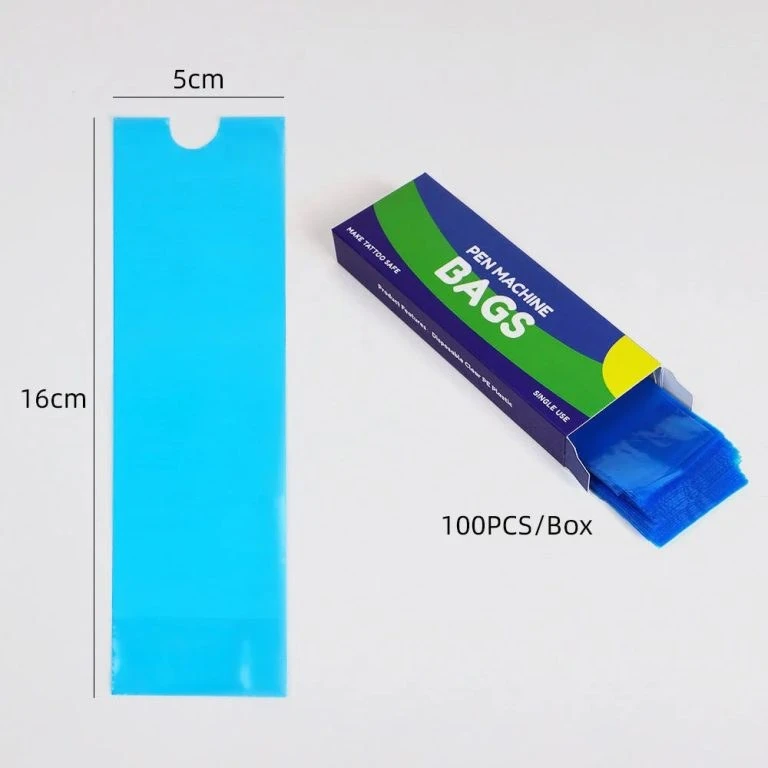
The tattoo clip line covers your tattoo clip line and can be used to prevent ink on the tattoo machine. It effectively reduces the noise of the tattoo machine when it is working. The disposable bag listing from Yaba states 100pcs/each box. Those are product-specific uses; a bag is not a repair part or a replacement for cleaning.
Fit, film feel, opening design, and pack consistency should match the machines artists actually use. That is the right test before a bulk order. If a cover is too short, too narrow, or awkward to open with gloves, it will create repeated handling problems at the station.
Know When Cleaning Becomes a Service Decision
Cleaning is appropriate only when the manufacturer permits it. If the issue continues after the approved external cleaning process, stop using the machine and ask for service. Do not keep changing power settings, cartridges, or covers to hide a mechanical symptom.
Use the machine’s normal behavior as the baseline. A change in sound, speed, heat, vibration, or needle motion points to a service decision rather than another cleaning cycle. For a professional studio, it is better to remove the machine from the working rotation and arrange inspection than to continue and risk inconsistent work.
Fit Maintenance into Storage and Reorder Planning
Maintenance is easier when the studio has a place for every item and a simple rule for replacement supplies. Storage should protect the machine and its accessories between sessions while keeping disposable covers, cartridges, and cleaning materials from getting mixed together.
Store the Machine and Accessories Consistently
Choose one storage routine and repeat it. Keep the machine protected when it is not in use, separate disposable covers from unused tools, and place cables, batteries, and power supplies in the same positions after every session. A consistent setup makes missing or damaged parts easier to identify.
A short maintenance log can make that routine more useful. Record the date, machine model, observed symptom, and any action taken, then note whether the issue returned after cleaning. The log does not replace service records, but it helps the studio compare one session with the next and avoid repeating the same temporary fix.
Storage is also part of maintenance because it controls how often the machine is moved, bumped, or exposed to clutter. The machine setup guide to coil and rotary differences can help a studio keep machine-type expectations clear when different artists share a workstation.
Calculate Disposable Bag Reorders from Studio Use
Count how many covers the studio uses during a normal week, then compare that number with the package size on the product listing. The disposable bag listing is sold as 100pcs per box, so reorder planning should use the studio’s actual usage rather than a guess based on storage space.
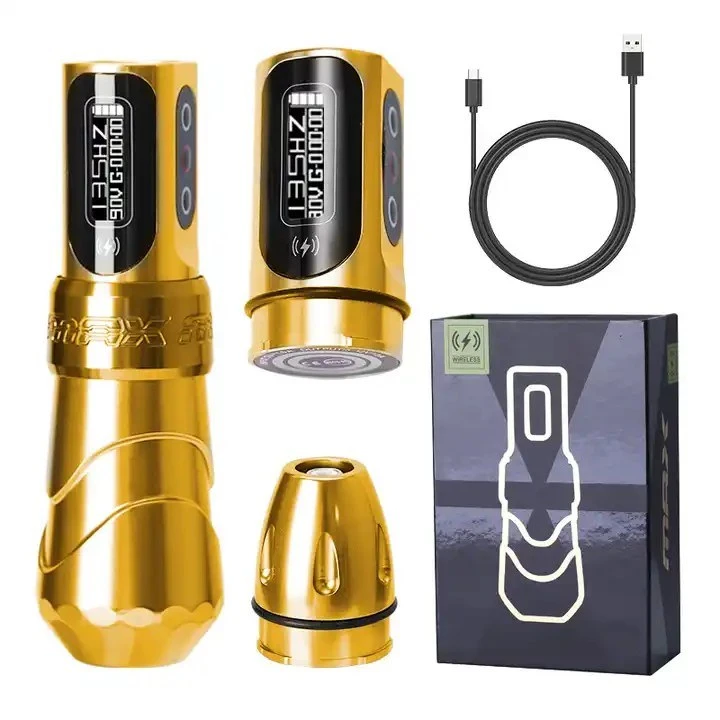
Der first tattoo machine selection guide is useful when a new artist needs to understand the machine type before setting up a maintenance routine. For artists comparing wireless equipment, the wireless tattoo machine guide explains why battery and power choices belong in the same setup discussion. Keep those links as context; the maintenance decision remains with the exact machine in hand.
Abschluss
Start with a stop-use check: confirm the exterior condition, connections, sound, speed, and needle motion before cleaning or continuing. Clean only within manufacturer boundaries, use disposable machine bags for surface protection rather than repair, and store the machine consistently. If the symptom remains after approved external cleaning, remove the machine from service and confirm the exact model, symptom, and history with a qualified service contact. Confirm the machine model, power setup, and accessory requirements before ordering replacement supplies or scheduling service.
Häufig gestellte Fragen
Q1: What should I check first during tattoo machine maintenance when it starts behaving differently?
A1: Stop using it and check accessible exterior condition, cable or battery connections, sound, speed, vibration, and needle motion. Avoid opening the machine or continuing to work while the cause is unknown.
Q2: Can a machine bag solve maintenance problems?
A2: No. The machine bag listing describes surface protection and noise reduction. A bag does not repair a mechanical problem, replace approved cleaning, or guarantee safety.
Q3: When should I stop using a tattoo machine and ask for service?
A3: Stop when the machine continues to sound, move, heat, or perform differently after the approved external cleaning steps. Record the symptom and model, then ask a qualified service contact to inspect it.