
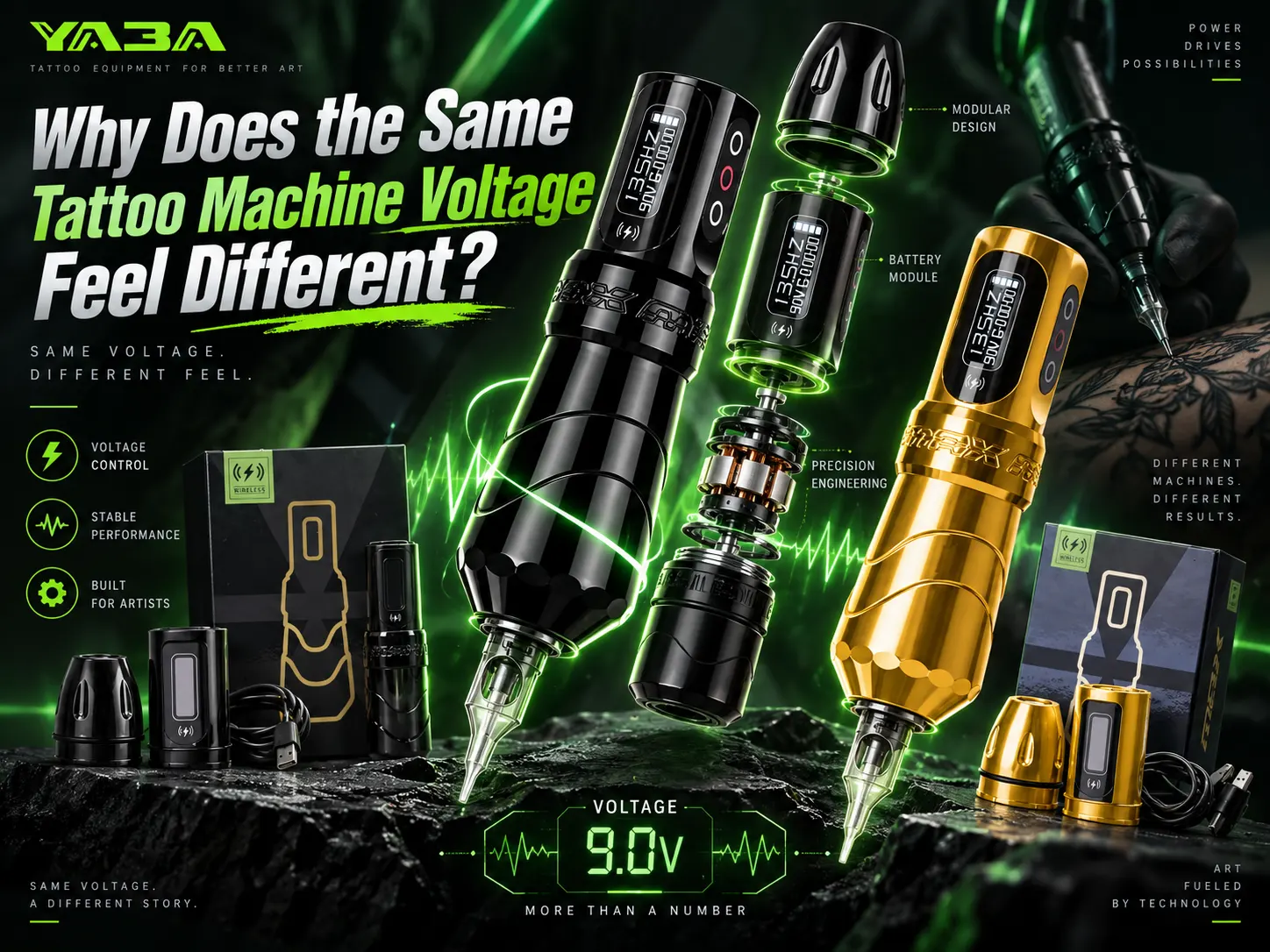
Set two tattoo machines to the same number and they may not feel remotely alike. One can sound fast and crisp; another can feel softer, slower, or more loaded under the same cartridge. That is why tattoo machine voltage is useful only when it is read as part of a complete setup. The common question — what voltage should I run my tattoo machine at — sounds as if there should be one clean answer. In practice, the number on the display is an input setting, not a universal measure of needle speed or “hit.” Motor design, controller behavior, stroke, needle grouping, hand speed, and the surface being practiced on all change what that number means.
A better goal is to learn which variables move together. Once you understand tattoo machine voltage and hand speed as a matched system, lining and shading settings become easier to repeat instead of easier to copy.
Why Can 8V Feel Different on Two Tattoo Machines?
Voltage tells you what electrical input the machine is receiving. It does not tell you exactly how every motor converts that input into motion.
Motor and Controller Design Change the Response
On a rotary machine, raising voltage will generally increase motor speed. But the relationship is not perfectly interchangeable between machines. A different motor, control board, gear arrangement, or battery system can produce a different response at the same displayed voltage.
That is why comparing tattoo machine voltage between two models is less useful than comparing how each machine behaves with the same cartridge and the same practice task.
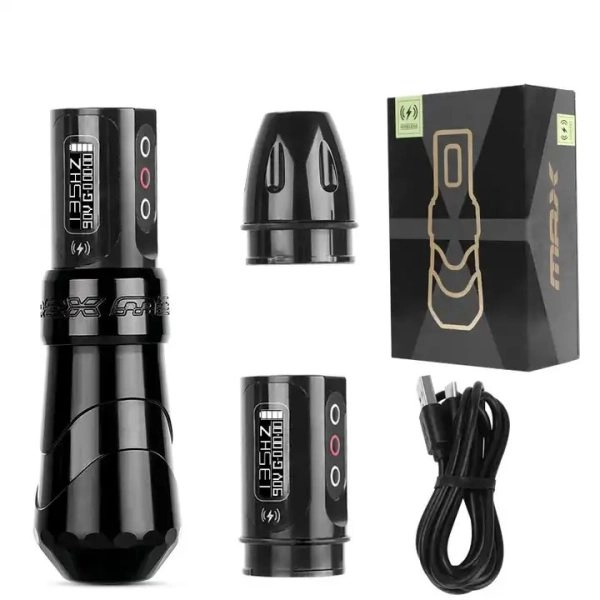
Der Flux MAX wireless tattoo machine provides a useful example. It offers a 4–12V output range and lets the user change voltage in either 0.1V or 0.5V steps. That finer control is valuable because the practical difference often appears in small changes, not in jumping from one whole-number setting to another.
Stroke Changes What the Same Speed Feels Like
Stroke length changes the distance the drive system moves through each cycle. A short-stroke setup and a longer-stroke setup can therefore feel different even when the display shows the same voltage.
This is one reason a voltage question needs more context. If the machine, stroke, cartridge, or hand speed changes, the old number becomes only a reference point.
Do not build a “favorite voltage” that follows you from machine to machine. Build a repeatable setup for each machine.
Why Does Needle Grouping Change the Useful Voltage?
A machine does not work in a vacuum. The cartridge is part of the mechanical load.
A small liner and a large magnum ask different things from the motor. The grouping, membrane resistance, needle travel, and the amount of contact against the practice surface all affect how the machine feels under load.
Tattoo Machine Voltage for Lining Is Not One Fixed Number
Search results often reduce tattoo machine voltage for lining to a range. That can be a starting reference, but it is not the decision itself.
A tight small liner, a bold round liner, and a large grouping used for heavier linework do not create identical resistance. If the artist also changes stroke or hand speed, the same voltage may produce a different result.
This is why tattoo machine voltage for lining should be adjusted by observing the whole line: Is the machine moving smoothly? Is the hand moving at a repeatable pace? Is the line on practice skin consistently saturated without needing repeated corrections?
The useful setting is the one that makes those variables work together.
Tattoo Machine Voltage for Shading Depends on the Motion You Want
Tattoo machine voltage for shading is often lower in common reference charts because many shading approaches use a softer, more controlled rhythm. But the label “shading” covers several motions and cartridge sizes.
A small curved magnum used for a light gradient is not the same workload as a large magnum used across a broad area. Whip-style movement also creates a different relationship between contact time and machine speed.
So tattoo machine voltage for shading should be treated as a tuning decision, not a memorized number.
How Should Tattoo Machine Voltage and Hand Speed Work Together?
This is where the display number becomes useful.
Tattoo machine voltage and hand speed have to make sense together because the machine is cycling while the hand is moving across a surface. If the hand travels faster while the machine cycles at the same rate, the spacing of those repeated contacts changes. If the machine speeds up while the hand does not, the same area receives more cycles over the same travel distance.
Use Consistency Before Chasing Speed
The mistake is trying to make the hand imitate somebody else’s voltage.
Instead, establish a hand speed you can repeat. Then adjust the machine around that rhythm on practice skin. This produces a setup you can actually reproduce.
If you are choosing a starting voltage, begin by holding every other variable steady. Use the same machine, same cartridge, same stroke, same practice surface, and the same simple line exercise. Change only voltage in small steps and compare the result.
Artists working on controlled drills can also use Yaba’s tattoo practice skin guide to build a repeatable training setup before changing several variables at once.
Small Voltage Steps Make Testing Easier
A large adjustment can change the machine enough that you no longer know which part of the result came from the machine and which came from your hand.
Smaller changes are easier to evaluate. Flux MAX supports 0.1V and 0.5V adjustment intervals, so an artist can make a small correction without turning a simple test into a different setup.
That matters when you are comparing machine speed with hand movement. The goal is not the highest clean number. The goal is the most repeatable combination.
Why Should You Avoid Copying Another Artist’s Voltage?
Because you are usually copying only one visible number from a much larger system.
You may not be using the same machine. You may not have the same stroke. You may not use the same cartridge brand or grouping. Your natural hand speed may be different. Even the way a wireless machine delivers and controls power can change the overall feel.
A copied number can be useful as a conversation starter, but it should not be treated as a calibration.
For the same reason, lining and shading voltage charts should be read as starting frameworks rather than rules.
Yabas tattoo machine collection includes wireless, pen-style, rotary, and other machine formats. That range itself is a useful reminder that one display number cannot describe every machine architecture in exactly the same way.
What Should You Change First When the Machine Feels Wrong?
Do not immediately add voltage.
First, identify whether the problem is actually power-related.
Check the Mechanical Setup Before Changing the Number
Confirm that the cartridge is seated correctly. Check whether the needle grouping is appropriate for the task. Make sure the stroke setting has not changed. On a practice setup, compare a fresh cartridge with the one that feels unusually resistant.
If a machine suddenly feels slower than it did five minutes ago, the answer may not be tattoo machine voltage at all.
This habit prevents a common troubleshooting mistake: compensating for a mechanical change with more electrical input.
Change One Variable at a Time
Use a simple test sequence:
- Keep the same machine and stroke.
- Use the same cartridge grouping.
- Work on the same type of practice surface.
- Keep the hand movement consistent.
- Change voltage in a small step.
- Label the test line with the setting.
- Compare before making the next change.
This creates a personal reference that is far more useful than a generic chart.
Over time, you can build separate notes for lining, shading, and different cartridge sizes. Those notes describe your real setup rather than somebody else’s.
How Can a Good Power System Improve Repeatability?
Useful equipment does not remove technique from the equation. It makes technique easier to measure.
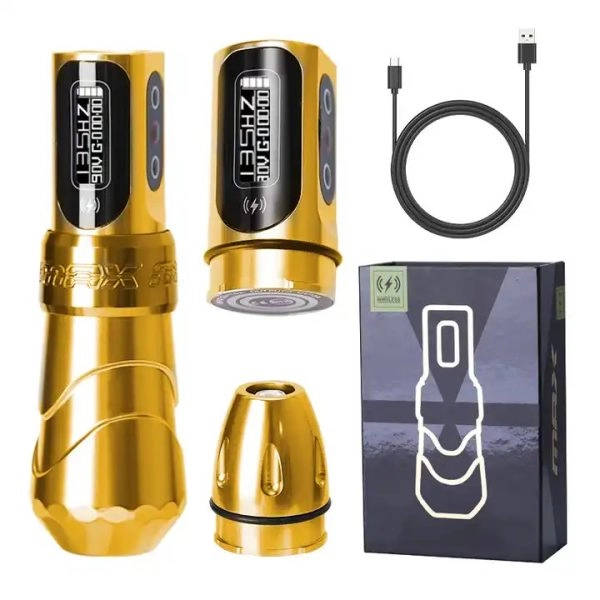
A stable display, small adjustment intervals, predictable controls, and a power source that fits the machine all make testing more repeatable. Flux MAX combines a 4–12V output range with 0.1V or 0.5V adjustment steps, USB-C charging, two batteries in the set, and a stated battery life of 6–10 hours. The machine weighs 229g and measures 130mm by 38mm.
Those details matter because a professional setup is not only about maximum power. It is about being able to return to a known setting and understand what changed when the result changes.
Yaba supports that workflow with machines, cartridges, power products, and practice equipment in one product system. Artists comparing a new machine with their current voltage habits can ask Yaba about setup matching before choosing a new configuration.
Abschluss
Tattoo machine voltage is not a universal performance score. Two machines can display the same number and still respond differently because the motor, controller, stroke, cartridge load, and hand movement are not identical.
Instead of asking only what voltage should I run my tattoo machine at, build a repeatable process. Keep most variables fixed, change one setting at a time, and learn how tattoo machine voltage and hand speed behave together on your own equipment.
That approach makes lining and shading settings easier to understand, easier to repeat, and much more useful than copying a number from someone else’s machine.
Häufig gestellte Fragen
Q1: What voltage should I run my tattoo machine at?
A1: There is no single setting that works across every machine. Use the machine maker’s operating range as a boundary, then test on practice skin while keeping stroke, cartridge, and hand speed consistent. The useful setting is the one your complete setup can repeat reliably.
Q2: Why does tattoo machine voltage for lining feel different with a larger liner?
A2: A larger grouping can change cartridge resistance and motor load. That means tattoo machine voltage for lining should be evaluated together with stroke, grouping, and hand speed rather than copied from a smaller liner setup.
Q3: Should tattoo machine voltage for shading always be lower than lining?
A3: Many artists use a softer machine rhythm for shading, but tattoo machine voltage for shading still depends on the machine, grouping, stroke, and movement style. Treat common ranges as starting references rather than fixed rules.