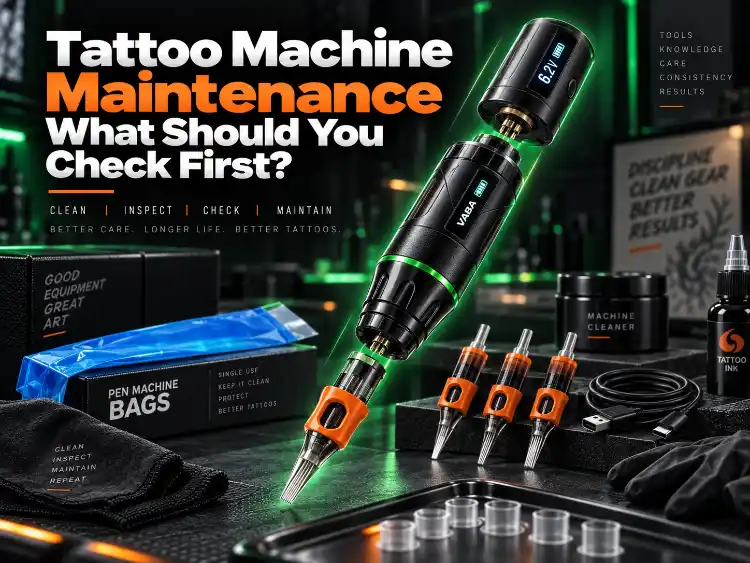
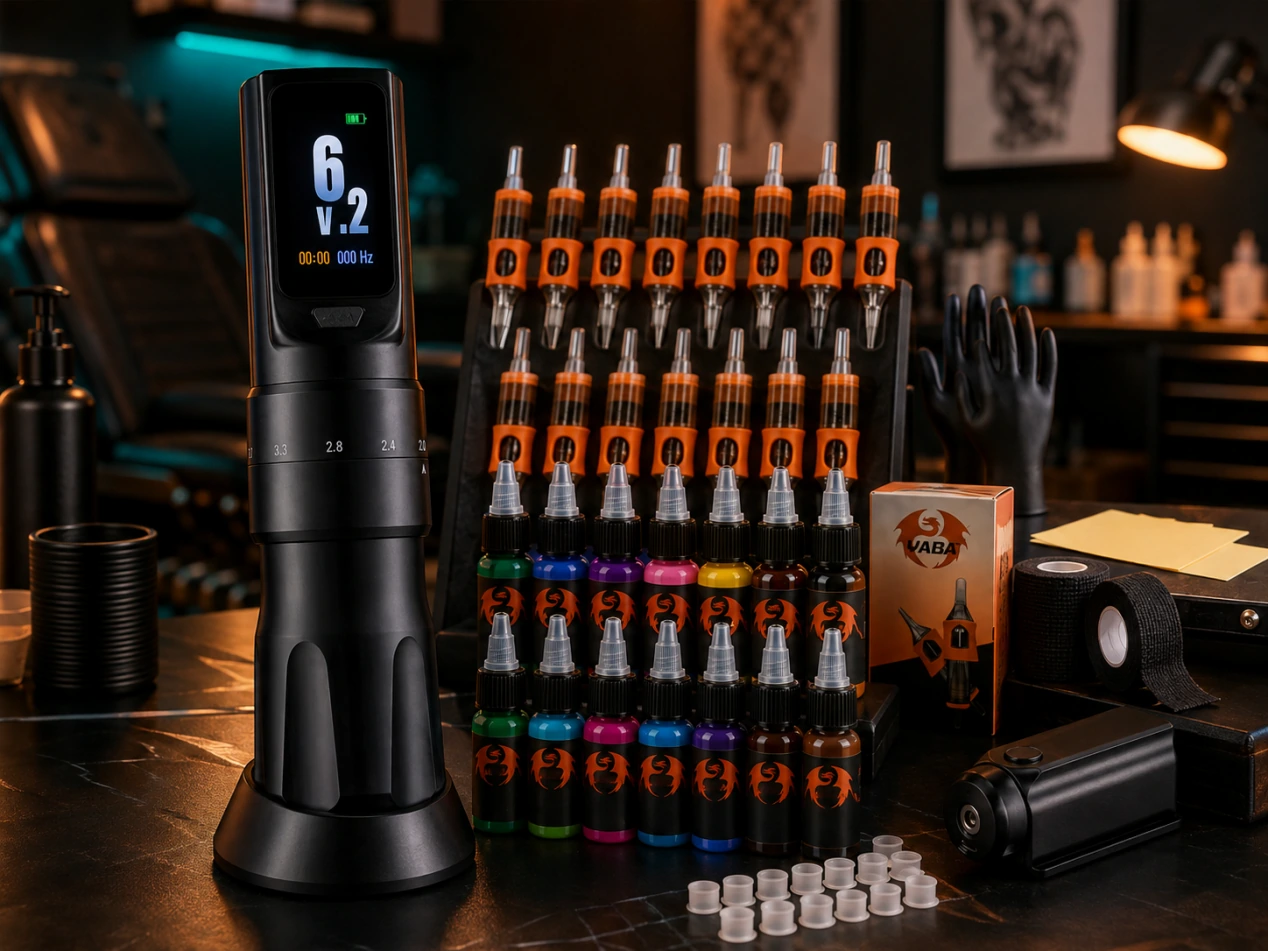
A professional tattoo studio setup needs more than a tattoo machine and a chair. Daily work depends on a coordinated mix of tattoo studio equipment: machines and power, cartridges, stencil tools, pigment organization, lighting, positioning support, disposable supplies, and a tattoo workstation that keeps the active area clear.
The strongest setup is not the one with the most equipment. It is the one where each item has a reason to be there. Frequently used tattoo supplies stay within comfortable reach, backup items stay out of the active zone, and the artist can move from preparation to tattooing and reset without constantly reorganizing the room.
That makes studio planning a workflow decision before it becomes a shopping decision. A new studio, an additional room, and a mobile setup may use many of the same products, but they do not necessarily need the same layout.
What Belongs in a Complete Tattoo Studio Setup?
A complete tattoo studio setup can be divided into three working layers: the equipment that performs the tattoo, the supplies that prepare and support the procedure, and the furniture or workstation equipment that keeps the artist and client in workable positions.
Core Equipment Supports the Actual Tattooing Work
Machines, compatible cartridges or needles, and a dependable power arrangement form the center of the station. The exact combination depends on the artist’s preferred machine format and service mix.
A studio using several artists may also need more than one machine format or a clear backup plan. Wireless equipment can reduce cable clutter, while wired systems may fit artists who prefer a fixed power arrangement. What matters is whether the machine, power source and cartridge system work as one setup.
For studios assembling or testing a broader starting configuration, YABA Tattoo Machine Kits With Small MOQ provides one route for comparing machine-based kits without treating every component as a separate purchase.
Preparation Supplies Create the Starting Point
Tattoo supplies used before needle work begins deserve their own zone. Stencil paper, printers, transfer products, skin-marking materials and pigment preparation items can quickly fill the same surface that later needs to hold the machine and cartridges.
Keeping preparation tools together prevents the workstation from turning into permanent storage. Once the design has been prepared, items that are no longer needed can leave the immediate work area.
Which Machine and Cartridge Setup Fits Daily Studio Work?
A professional tattoo equipment list becomes more useful when compatibility is checked before individual features. A machine can look suitable on its own and still create frustration if the cartridge format, power arrangement or backup equipment does not match the rest of the room.
Cartridge Range Needs to Follow the Service Mix
A studio doing fine lines, shading and larger color work may need several cartridge groupings. That does not mean every configuration needs to sit open on every station. The working selection should follow the session, while the larger inventory stays organized separately.
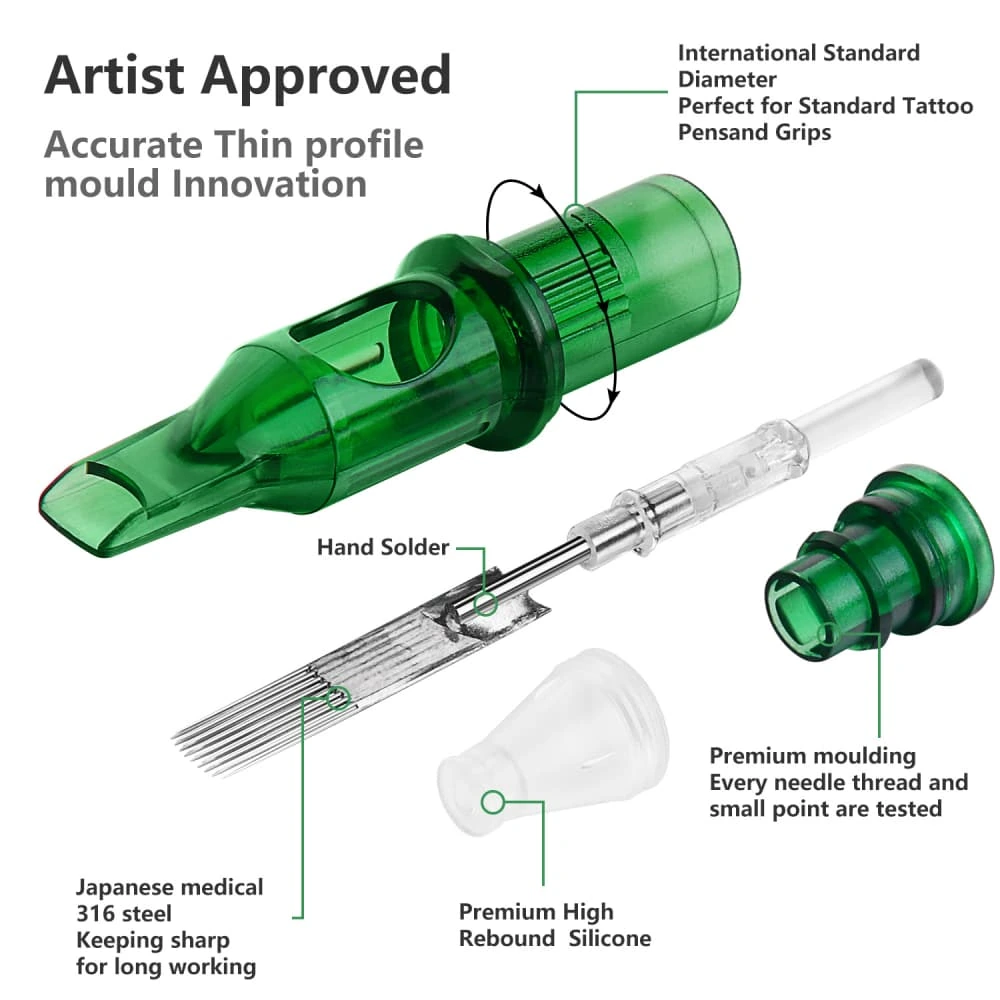
YABA Pro Tattoo Cartridges range includes liner, shader and magnum configurations, giving studios a way to organize different needle-grouping needs within one cartridge family.
Backup Equipment Needs a Defined Role
Backup does not have to mean duplicating the entire tattoo workstation. It means identifying the failure points that would otherwise stop the appointment.
For one studio that may be an extra battery. For another it may be a second machine, spare power arrangement or additional cartridges in frequently used groupings. Backup products belong close enough to reach when needed but not mixed into the active working area.
How Can a Tattoo Workstation Stay Organized During a Session?
The tattoo workstation is where a good room plan is either confirmed or exposed. Once gloves, cartridges, pigments, wipes, rinse cups and machine accessories enter the same space, a large surface can become crowded surprisingly quickly.
Active Supplies Need Their Own Working Zone
The products used repeatedly during the current session deserve the shortest reach. Pigment cups, the active machine, required cartridges and frequently handled small supplies should not be hidden behind backup stock.
A useful workstation does not force the artist to reach across several products for one cup or cartridge. Every repeated reach may be small, but over a long appointment the layout becomes part of the working rhythm.
Color Work Needs More Than Empty Table Space
Multiple pigments need clear separation without taking over the entire surface. Loose cups can work for small color sets, while tray formats become useful when several shades need to stay arranged in a predictable order.
The Yaba Tattoo Supply Ink Cups Tray uses 50 integrated 10 mm cups in one tray format, making it relevant where color grouping and compact pigment organization matter more than arranging individual loose cups one by one.
Why Does the Stencil System Matter to the Whole Studio?
Stencil equipment is sometimes treated as something separate from tattoo studio equipment because most of it is used before the machine starts. In practice, failed printing, unclear transfer or repeated repositioning can disrupt the appointment before tattooing begins.
Printing and Transfer Need to Work as One Process
The printer, paper and transfer material should suit the designs commonly produced by the studio. A compact room may value equipment with a smaller footprint, while artists preparing large or repeated designs may care more about paper format and predictable output.
A combined option such as the P19 Printer + 30m Roll Transfer Paper Set also shows why studio planning is broader than buying a printer alone. Output media is part of the same preparation process.
Corrections Need a Place in the Setup
Stencil preparation does not always end after the first transfer. Placement may need to be reconsidered before tattooing starts. Products used for corrections should therefore be planned with the rest of the stencil zone rather than appearing as an emergency item after the workstation is already full.
The goal is not to keep every stencil product on the tray. It is to keep the preparation sequence easy to repeat.
Which Furniture Changes the Way a Tattoo Studio Works?
Furniture affects more than appearance. The artist’s reach changes when the client changes position, and the same workstation may feel completely different beside an arm piece, a leg piece or a larger body placement.
Client Support Influences Artist Reach
Armrests, leg supports, chairs and working beds help create a stable working position. If the client has to be moved repeatedly because the support does not suit the placement, the artist often ends up moving the light, trolley and stool as well.
The result is a chain reaction: one positioning change reorganizes half the room.
The Workstation Needs to Follow the Working Position
A fixed table may fit one room perfectly but become awkward when the artist needs to work around different sides of the client. Mobile storage, adjustable stands and integrated workstation systems can make more sense where the working angle changes frequently.
The wider YABA Tattoo Studio Products range gives studios a place to compare workstation, furniture and support products as part of the same room plan rather than isolated accessories.
Why Is Lighting Part of Professional Tattoo Equipment?
Room lighting and task lighting solve different problems. General lighting makes the room usable, but the artist still needs controlled visibility at the exact working area.
A Strong Light Is Not Enough If the Angle Is Wrong
A hand, machine or client position can cast a shadow even in a bright room. A useful tattoo light needs to reach the working zone without forcing the artist to move the client every time the hand angle changes.
Wall-mounted lighting can preserve floor space. Tripod lighting can move between stations. Integrated workstation lighting can keep light and storage within the same working footprint.
Lighting Needs to Fit the Room, Not Fight It
Before choosing another floor stand, look at where the chair, trolley, artist stool and walking path already sit. Adding equipment that blocks movement may solve visibility while creating a new layout problem.
That is the larger rule for tattoo studio equipment: improving one task should not make three other tasks more awkward.
Which Small Tattoo Supplies Matter More Than Their Size Suggests?
Studios often spend the most planning time on machines and furniture, yet small products are the ones that disappear, run out or move around most often.
Consumables Need a Restocking System
Ink cups, covers, wipes, barriers and other frequently replaced tattoo supplies should not depend on someone noticing the final pack is almost empty.
A professional tattoo studio setup needs a simple separation between daily working stock and reserve inventory. The active station only needs enough material for the immediate workflow. Reserve stock belongs somewhere easier to count and replenish.
Used Items Need a Clear Exit From the Working Area
The same logic applies at the end of use. Used sharps and disposable items should not remain among fresh supplies simply because the nearest disposal point is inconvenient.
The practical question during layout planning is straightforward: where does an item enter the workflow, where is it used, and where does it go when the artist is finished with it?
What Changes When a Studio Handles More Clients?
A setup that feels manageable for one artist and two appointments can become frustrating when the same routine repeats across several rooms.
Repetition Exposes Weak Equipment Choices
If one tray is slightly unstable, that may seem minor once. If several artists adjust it all day, it becomes a recurring workstation problem.
The same is true for charging, cartridge organization, stencil preparation, lighting and storage. Higher volume makes small mismatches easier to see.
Standardization Can Reduce Avoidable Variation
Not every artist needs identical equipment, but shared rules can simplify restocking and setup. Studios can standardize items where consistency matters while leaving technique-dependent choices flexible.
That balance is especially useful for cartridge families, disposable supplies and workstation accessories that need frequent reordering.
How Can Buyers Compare a Full Tattoo Studio Setup?
Buying professional tattoo equipment becomes easier when the full service mix is written down first. A studio focused on fine-line work may allocate space differently from one doing large color projects. A mobile artist has different storage priorities again.
Build Around Workflows, Not Product Categories
Instead of beginning with “machines, furniture, accessories,” map the room through preparation, positioning, tattooing, switching, cleanup and reset. Then place equipment where each stage creates a real need.
This also prevents duplicate purchases. Two products may solve the same problem in different ways, while another critical step has no support at all.
Test the Setup Before Scaling It Across Rooms
A sample station can reveal reach problems, cable conflicts, storage shortages and lighting issues before the same mistake is repeated across several rooms.
Studios and distributors planning a wider purchasing list can plan a complete studio supply order with YABA by sharing the room type, target services, equipment already in use and the products that need to be added.
Conclusion
A professional tattoo studio setup works best as a connected system. Machines, cartridges, stencil materials, pigment organization, lighting, furniture and disposable tattoo supplies all affect what happens around the same client.
The useful question is not how much professional tattoo equipment can fit into a room. It is whether each product reduces friction at a specific point in the workflow. Keep active items close, reserve items organized, positioning equipment adaptable and workstation space intentional. That approach creates a tattoo studio setup that can grow without becoming harder to use.
FAQs
Q1: What equipment does a professional tattoo studio need?
A1:A professional studio normally needs tattoo machines and compatible needles or cartridges, power equipment, stencil supplies, pigment organization, appropriate furniture, task lighting, workstation storage and disposable supplies suited to its services.
Q2: How do you organize a tattoo workstation?
A2:Keep the products used during the current session closest to the artist. Move backup stock away from the active zone, group pigments and cartridges clearly, and give used items a defined exit from the workstation.
Q3: What tattoo supplies need regular restocking?
A3:Frequently used disposable items such as ink cups, barriers and other session consumables need the clearest stock-control routine because they are replaced much more often than machines or furniture.